Showing posts with label Britten. Show all posts

May 15, 2022

When There Are No Words... (CD review)

Revolutionary Works for Oboe and Piano by Hindemith, Haas, Bolcom, Britten, Siqueira, and Slavicky. Alex Klein, oboe; Phillip Bush, piano. Cedille CDR 90000 208.

By John J. Puccio

Are we experiencing an oboe renaissance? Seems that way, given the number of new, classical oboe recordings I’m seeing: concertos, sonatas, solos, you name it. I’m not complaining, mind you. The oboe will never compete with the violin or piano in terms of featured musical instruments, but the oboe deserves its place in the sun. Power to the oboe!

More important, the works on the present album express the musical views of five composers who faced the realities of war, hate, and exile. The music represents their frustrations and grievances towards a world gone mad. They attempted to express in music what words alone could not.

On this Cedille disc, oboist Alex Klein and pianist Phillip Bush provide us with six oboe and piano compositions, and they do them up in accomplished style. First, though, a word about the players. Klein (b. 1964) began playing the oboe at the age of nine in his native Brazil and made his solo orchestral debut a year later. By the time he was eleven he joined one of Brazil’s foremost chamber ensembles, the Camerata Antigua. In his teens he performed as a soloist with several orchestras in Brazil and then studied at the Oberlin Conservatory of Music. He went on to win numerous awards before becoming an Assistant Professor of Music at the University of Washington and joined the Chicago Symphony Orchestra in 1995 as principal oboe. Since then, he has performed as soloist with the Chicago Symphony, Philadelphia Orchestra, the Orchestre de la Suisse Romande, and the Chicago Sinfonietta. His partner on the current album, Phillip Bush (b. 1961), is an American concert pianist whose career has largely focused on chamber and contemporary works.

First up on the program is the Sonata for Oboe and Piano, written in 1938 by the German composer Paul Hindemith (1895-1963). The sonata expresses the composer’s anxiety over a Germany obsessed with hatred. The first of two movements is actively rhythmic in the manner of slightly askew military march; the second is mournful, drawing on long, intense, soulful passages. The players do it up in a forthright manner, amply conveying the melancholy of loss and impending doom.

Next is the three-movement Suite for Oboe and Piano, written in 1939 by the Czech composer Pavel Haas (1899-1944). He, too, faced a world haunted by fear, anger, and hostility. The music is both discomforting and uplifting by turns, and Klein and Bush make the most of its pulsating beat, its dramatic pauses, its woeful, sometimes fearful tone, and its inspiring emotion. The oboe seems a most-appropriate instrument for this type of music, and Klein proves an expert practitioner at drawing from it the most expressive elements.

The central work on the disc is titled Aubade--for the Continuation of Life, written in 1980 by the American composer and pianist William Bolcom (b. 1938). An “aubade” is a poem written to greet the dawn, a morning song, only here Bolcom is more concerned with that dawn possibly never happening at all. The world looked on as the U.S. and Europe engaged in a Cold War with the Soviet Union, and the chance of a nuclear war was ever present. It’s a frankly gloomy piece, grounded in loneliness and a sense of hopelessness, moods well captured by the tone of the oboe.

After that is Temporal Variations, written in 1936 by the English composer, conductor, and pianist Benjamin Britten (1913-1976). He intended it as an antiwar statement when the threat of war with Germany loomed ever closer. It’s in nine brief movements, each a variation of a two-note, two-syllable theme that seems to repeat “enough.” It’s probably the most interesting item on the agenda, the most urgent in its thoughts, the most musically variable and insightful. Klein and Bush are at their best here, too, shaping each short proclamation as an independent thought yet keeping everything together as a cohesive whole.

The penultimate item is Three Etudes for Oboe with Piano Accompaniment, published in 1969 by the Brazilian composer, conductor, and musicologist Jose Siqueira (1907-1985). He was forcibly expelled from his native country and wrote music to convey his feelings. These are somewhat nostalgic, evocative melodies, more lyrical than those of the other composers on the program, the Etudes featuring a central, dance-like scherzo. Above all, the performers bring out the colorful language of the piece, capturing the spirit, grace, and beauty of Siqueira’s homeland.

Concluding the album we find the Suite for Oboe and Piano, written in 1960 by Czech composer Klement Slavicky (1910-1999). Like Siqueira, Slavicky was expressing in music his regret at what was happening in his country, in this case under the Soviet regime. It alternates bright, positive accents with doleful, ominous ones, the oboe capturing the wistful, introspective nature of the music, with the piano in complete sympathy.

Producer James Ginsburg and engineer Bill Maylone recorded the music at Gannon Hall, DePaul University, Chicago, Illinois in July, 2021. As we expect from Cedille and its chief engineer, the sound is as realistic as being in the room with the players. Both the oboe and piano are clear and natural, with no edginess, no dullness, no oddities whatsoever. It’s just good, pure sound.

JJP

December 12, 2021

The British Project (CD review)

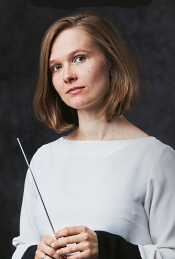
Music of Elgar, Britten, Walton, and Vaughan Williams. Mirga Grazinyte-Tyla, City of Birmingham Symphony Orchestra. DG 486 1547.

By Karl W. Nehring and John J. Puccio

The music according to Karl:
Parts of this recording were previously made available by DG in dribs and drabs as digital downloads by DG but now the entirety of The British Project featuring the City of Birmingham Symphony Orchestra under the baton of the young Lithuanian conductor Mirga Grazinyte-Tyla (b. 1936) is finally available on CD. Having been quite impressed by a previous recording by these same forces (https://classicalcandor.blogspot.com/2019/07/weinberg-symphonies-nos-2-21-kaddish-cd.html), and being quite a fan of British music, I have long been looking forward to this release. So, with a Lithuanian conductor and a German label, what do we have going here?

The program opens with Sospiri (“Sighs”) by Sir Edward Elgar, a brief composition for string orchestra, harp, and organ. This is not the Elgar of Pomp and Circumstance; rather, it is music that is plaintive and emotional, yes, but in a much more introspective way than we might expect from Elgar. In any event, it is beautiful music and its somber tone sets the stage for the next work on the program, Britten’s Sinfonia da Requiem, a work for large orchestra that the liner notes aptly describe as “a musical onslaught of rage and sorrow whose dark brilliance and concentrated emotional power can still thrill and disturb us today.” I spent some time comparing this version to two other versions that are well-regarded in audiophile circles, the Previn on EMI and the Stern on Reference Recordings. I was really surprised at how different the Grazinyte-Tyla version sounds from those two, both of which seem to go out of their way to sound dramatic, with drum sounds that seem to be heralding the end of time. As much as the audiophile got a kick out of that kind of sound, I must say that the music lover in me was won over by what seems to be the more rational, better balanced approach of Grazinyte-Tyla and the DG engineers. I just found myself enjoying the music more. Not to say that the DG engineering does not sound excellent; indeed, it is clean and well-balanced. But hey, I’ll still pull out the RR or EMI CDs when I want a guilty pleasure.

As far as Walton’s Troilus and Cressida music, which actually takes up the most time on this release, I unfortunately do not have much to say, as it is music with which I am completely unfamiliar. It is interesting enough, and has some dramatic moments (the movement titled The Lovers has some beautiful passages, and the Finale generates plenty of energy), and yes, it is good to have something to audition other than the “usual suspects.” The program ends with a rendition of the Fantasia on a Theme by Thomas Tallis by Vaughan Williams that seems to begin with a bit more nervous energy than usual, but as it moves along, develops more of the calm, reflective beauty to which we are accustomed to hearing in this venerable composition, surely one of the landmarks of British music. Both the performance and the recording do a fine job of highlighting the antiphonal nature of the arrangement, helping to make this an appropriate performance to cap off an endeavor titled The British Project. 

KWN

The music according to John:
For at least the last fifty-odd years I have had a deep admiration for the City of Birmingham Symphony Orchestra. Of course, the orchestra has been around a lot longer than that. In fact, its origins (if not its name) go back hundreds of years. But it was only in the early 1970’s that I noticed them because EMI was making some of the best-sounding records available with the orchestra under their leader at the time, Louis Fremaux. When Fremaux departed, the orchestra got Sir Simon Rattle, who produced some of the most-enthusiastic performances I have probably ever heard from him. After a few more notable leaders (Sakari Oroma, Andris Nelsons), in 2016 the Lithuanian conductor Mirga Grazinyte-Tyla became the orchestra’s newest Music Director.

Just as Rattle’s energetic ardour replaced Fremaux’s Gallic charm, so does Ms. Grazinyte-Tyla’s delicate touch supplant the bulkier styles of her predecessors. Not that she isn’t capable of generating a good deal of excitement, as several of the selections on this disc demonstrate, but it’s her more sensitive moments that linger in memory. At least that’s how I came away from this first listening to her work. It was a good first impression.

So, we have four British works on the agenda, the first being Edward Elgar’s Sospiri, an adagio for string orchestra, harp, and organ that Elgar wrote in 1914. Although it is brief, Ms. Grazinyte-Tyla makes the most of it--almost literally, as it’s the longest performance of the piece I think I’ve ever heard. To put that into perspective, Sir John Barbirolli took just over five minutes to perform it. Ms. Grazinyte-Tyla takes almost seven minutes. “Sospiri” in Italian means “sighs,” and that’s the way Ms. Grazinyte-Tyla plays it: as one, long, wistful sigh. The performance is a little different, but it’s quite a moving one, given The Great War that was about to change England and Europe forever.

Next, we have Benjamin Britten’s Sinfonia da Requiem, the centerpiece of the album. Britten wrote it in 1940 for the Japanese government to celebrate the government’s founding. However, they rejected it for its use of Latin headings for the movements and for its largely grim tone. Maybe they didn’t understand the meaning of “requiem” (a mass for the dead). Good thing, in any case, given the coming Second World War. Fortunately, it found an audience at home and has been one of Britten’s more popular pieces ever since. Here, Ms. Grazinyte-Tyla can be fairly forceful, along with being subtle and conscientious. The work offers her every opportunity to show us her expertise as a conductor, and she comes through in both tender and thrilling fashion. She pulls the music gently in all directions and delivers a mournful yet warmhearted performance.

Following Britten is William Walton’s Symphonic Suite from his opera Troilus and Cressida. The opera appeared in the mid 1950’s to mixed reviews (it wasn’t “modern” enough), but the orchestral suite we get here (created in 1988 by Walton’s collaborator Christopher Palmer) has fared a tad better. It’s filled with high drama, which Grazinyte-Tyla elaborates with an easy grace.

The program concludes with Ralph Vaughan Williams’s Fantasia on a Theme by Thomas Tallis for double string orchestra. Vaughn Williams based the central tune on a hymn by the eighteenth-century English composer Thomas Tallis, and VW premiered it 1910. It was among his early successes, and under Grazinyte-Tyla’s graceful control it gets a splendidly relaxed yet spirited and sweetly flowing interpretation.

Producer Andy Guthrie and engineers Ian Barfoot and Jamie Hickey recorded the Vaughan Williams and Elgar at Symphony Hall, Birmingham, England in November 2020 and March 2021; and producer Vilius Keras and engineer Aleksandra Keriene recorded the Britten and Walton at Elbphilarmonie, Hamburg, Germany in October 2019. The sound is quite good. Not quite in the same league as the old EMI/Fremaux recordings for ultimate clarity and impact but smooth, natural, and ultimately realistic, nevertheless. DG has always been good with dynamic range, and the engineers demonstrate their skills with the softest to loudest passages. The disc makes a pleasurable listen.

JJP

To listen to a brief excerpt from this album, click below:

November 10, 2021

British Solo Cello Music (CD review)

Benjamin Britten (1913-1976): Tema ‘Sacher’; Cello Suite No. 3; (Themes used in the Cello Suite - Mournful Song; Autumn; Street Song; Kontakion); Sir William Walton (1902-1983): Theme for a Prince; Passacaglia; John Gardiner (1917-2011): Coranto Pizzicato; Frank Merrick (1886-1981): Suite in the Eighteenth-Century Style; Thomas Adés (b. 1971): Sola. Steven Isserlis, cello; Mishka Rushdie Momen, piano. Hyperion CDA68373.

By Karl W. Nehring

Cellist Steven Isserlis (b. 1958) is a major figure on the British music scene, something like Yo-Yo Ma in the United States. His gregarious personality and sparkling with make him an interesting person to follow on Twitter. It is of course it is his virtuosity on the cello that primarily interests us here, although his talent as a writer also enhances this release, for he has written the liner notes, which are both informative and entertaining. Even his hair contributes to the production, adding an intriguing visual image to the front cover of the CD.

The program opens with two compositions by that giant of 20th-century British music, Benjamin Britten. The brief (1:37) Tema ‘Sacher’, a bold, energetic musical statement based on the letters of his teacher Sacher’s name in musical notation, written as a musical gift in honor of Sacher’s 70th birthday in 1976. Other composers who contributed works in this vein included Dutilleux, Lutoslawski, Holliger, Henze, Berio, and Boulez. Then comes his Cello Suite No. 3, a substantial work ranging over 13 movements and lasting 23 minutes in Isserlis’s rendition. The music is passionate, at times troubled, very expressive and moving. Isserlis’s liner notes tell of a connection with Britten’s concern for the plight of his friend Shostakovich having an influence on the music. In any event, this is serious music that rewards serious listening. Following on the heels of the solo cello suite, Isserlis lightens the mood by adding the sound of Ms. Momen’s piano to that of his cello as they play three brief themes that served as a basis for the suite. Isserlis then returns to his solo cello to play Britten’s adaptation of Kontakion, a Russian Orthodox chant that was the fourth underlying theme of the suite (the liner notes go into more detail on these themes and how Britten used them).   

Walton’s brief (1:28) Theme for a Prince was written as part of a collection of 14 pieces composed in 1969 to honor Prince Charles’s 19th birthday. The more substantial Passacaglia was written for the great Russian cellist Mtsislav Rostropovich (1927-2007). Interestingly enough, Isserlis reveals in his liner notes that when he heard Rostropovich play it in 1982, the piece did not make much of an impression on him, nor did he think much of it when he received a copy of the score some time later. Only recently did he come to appreciate the piece, and thus came to record it. It is something of a rugged-sounding piece, rough and ready if you will, but earnest and direct.

After the earnestness of the Walton piece, the playfulness of the Gardiner Coranto pizzicato, which Isserlis opines “is evidently inspired by Elizabethan lute music,” is a nice change of pace. Isserlis does some lively plucking; both his playing and his liner note anecdotes regarding Gardiner reveal that Isserlis is in especially high spirits when it comes to this particular piece. I will confess that I had never heard of the next composer on the program, Fran Merrick, before encountering this CD, but Isserlis spins quite a tale of tale of meeting the composer when the cellist was still just a boy. Merrick’s Suite in the Eighteenth-Century Style is the longest composition on this CD, stretching out to nearly 34 minutes. It is something of a tribute to the music of Bach; as a matter of fact, I recently spent some time enjoying the Bach Cello Suites as performed by the late Janos Starker on a Mercury Living Presence 2-CD set, and listening to the Merrick Suite feels like a natural follow-up, which is high praise indeed. The program ends with a brief (2:11) piece by contemporary composer Thomas Adés. Isserlis notes that the composer wrote it on one Saturday night and faxed it to a cellist friend. To these ears, the back story is more interesting that the music, which is listenable but not much more.

Overall, this is a rewarding release. The liner notes really are fascinating, with personal anecdotes and insights about the composers and the music that really add to the album. The sound quality is balanced and natural, highlighting the expressive range of Isserlis’s “Marquis de Corberon” Stradivarius of 1726, which he has on loan from the Royal Academy of Music. It is a beautiful instrument, beautifully played. Bravo!

KWN

October 6, 2021

Images (CD review)

Anna Lapwood, Organ of Ely Cathedral. Ravel: Le Tombeau de Couperin (arr. Erwin Wiersinga); Patrick Gowers: An Occasional Trumpet Voluntary; Debussy: Andante from String Quartet in G Minor (arr. Alexandre Guilmant); Kerensa Briggs: Light in Darkness; Nadia Boulanger: III. Improvisation from Trois Improvisations; Owain Park: Images; Britten: Four Sea Interludes from Peter Grimes (arr.Lapwood); Messiaen: Vocalise-Étude (arr. Lapwood); Cheryl Frances-Hoad: Taking Your Leave. Signum Classics SIGCD688.
 
By Karl W. Nehring
 
Having followed Anna Lapwood on Twitter for quite some time, and having seen and heard some videos she had posted there of her working on her arrangements of Britten’s Four Sea Interludes from Peter Grimes, I have been looking forward to auditioning this new release for some time now. Her posts on Twitter show her to be a charming and unpretentious artist, devoted not only to her craft, but also to helping other musicians, especially young musicians, express themselves through music. She is skilled not only as an organist, but as a conductor and broadcaster. Earlier this year, for example, she appeared at the BBC Proms both as a presenter for BBC Television and as soloist in the Saint-Saens Organ Symphony. In 2016, when she was just 21, she was appointed Director of Music at Pembroke College, Cambridge University, where in 2018 she established the Pembroke College Girls’ Choir for girls aged 11 to 18. According to the liner notes, Ms. Lapwood conducted the Chapel Choir and Girls’ Choir in a recording titled All Things Are Quite Silent that was “released in 2020 to widespread critical acclaim, praised for their clarity, blend and beauty of sound.”
 
When that fateful day came when her long-awaited album arrived at my door, I was delighted to discover that the opening piece on the program was a transcription for organ of one of my favorite pieces by one of my favorite composers, Le Tombeau de Couperin by Maurice Ravel. Ravel originally composed it in six movements for piano (Prelude, Fugue, Forlane, Rigaudon, Menuet, Toccata) and then later orchestrated four of the movements (Prelude, Forlaane, Menuet, Rigadoun). The orchestral version is probably the one that is more familiar to the typical classical listener. I have auditioned many and still own several versions of both the piano and orchestral versions of Le Tombeau, a composition that I have requested be played at my wake. No, until received this recording, I had never imagined hearing this music being played on an organ, but what do you know, it works surprisingly well. My only quibble – and it is a minor one, I must say – is that the opening measures of the Forlane seemed to feel a bit heavier, a bit less dance-like, than they should to my ears, but other than that, hearing this music presented in this way was a delightful surprise. Immediately following the Ravel on the program is a brief piece by Patrick Gowers (1936-2014) featuring a repetitive theme that becomes quite grand at the end, when the organ volume is cranked up into a fanfare-like climax. It is quite a sonic and musical contrast, then, when we next hear an arrangement for organ of music from Debussy’s String Quartet. Once again, to hear this music played on the organ this is something quite unexpected, but also once again, it is something quite entrancing. Whereas the music from a string quartet emanates from a small space on stage or better yet, in a room (it is chamber music, remember), the sound of the organ (even from a recording) can seem to originate from the dark recesses of a vast space, thus transforming our perception and understanding of the music.
 
Light in Darkness
 by Kerensa Briggs (b. 1991) continues in a musical direction similar to that of the Debussy, sustaining much the same mood and sonority (an audio system with extended bass response will enhance your enjoyment, by the way). This is music for reflection and contemplation. The following brief piece by Nadia Boulanger (1887-1976) continues in a similar tranquil mood, but after a quiet but somewhat restless-sounding first couple of minutes, Images by Owain Park (b. 1993) cranks up the volume for a spell and begins to ratchet up the tension. As the plural title implies, it is not a piece that sustains a single mood.
 
We then come to the centerpiece of the album, Ms. Lapwood’s arrangement and performance of Britten’s Four Sea Interludes from his opera Peter Grimes. This is music that in its orchestral guise is doubtless familiar to many readers of Classical Candor, two of the finest recordings being those of Andre Previn and the London Symphony Orchestra on EMI and Michael Stern and the Kansas City Symphony on Reference Recordings. Once again, it is remarkable to hear how effective these transcriptions for organ turn out to be. You quickly find yourself forgetting that this is not an orchestra -– you just let yourself be drawn into and swept away by the music. How I would love to hear this in a live organ recital someday… My only regret is that Ms. Lapwood did not press on further and include a transcription of the Passacaglia, but surely I should not be so greedy. Brava, Ms. Lapwood!
 
After the power and fury of Britten’s Storm, we are given a chance to catch our breath and slow down our heart rate to the gentle sounds of Olivier Messiaen’s (1908-1992) Vocalise-Étude, written when the composer was a young man of 27. This is intimate music of serene repose. The album then closes with the appropriately titled Taking Your Leave by Cheryl Frances-Hoad (b.1980), a boisterous, energetic piece that showcases that other, more outgoing and demonstrative dimension of organ and organist, a fun way to end the album.
 
Images was recorded by the veteran engineer Mike Hatch, who has done his usual fine job of capturing a convincing sonic portrait. There is a page in the liner notes devoted to the history of the organ at Ely Cathedral as well as a complete listing of its specifications for those interested in the details of the instrument. In addition, Ms. Lapwood offers informative and charming notes on all of the selections included on the album. In every way, this is truly a first-class production for which I offer a highly enthusiastic recommendation.
 
KWN

October 31, 2018

Ravel: Sheherazade (CD review)

Also, Debussy: La damoiselle ellue; Britten:  Les illuminations. Sylvia McNair; Susan Graham; Seiji Ozawa, Boston Symphony Orchestra and Tanglewood Festival Chorus. Philips 289 446 682-2.


The three song cycles assembled on this 1999 Philips release are voluptuous and sensitive, even if the musical setting for Britten's collection of short poems is in a somewhat less ethereal world than the other two.


The highlight, as one might expect from its greater popularity, is the opening composition, Maurice Ravel's Sheherazade. Inspired by the impressionism of Debussy, Ravel's Sheherazade inhabits a far different landscape than Rimsky-Korsakov's earlier, more literal series of tone poems. The Ravel is all shapes and shadows and sinuous lines.


Debussy's early piece La damoiselle ellue is likewise more figuratively evocative than literal. It is based on the verses of British poet and illustrator Dante Gabriel Rossetti describing his painting of "The Blessed Damozel," and adds to the mix a chorus with soprano narration. In some ways it is more lyrical than the Ravel and equally atmospheric.


Sylvia McNair

English composer, conductor, and pianist Benjamin Britten's Les illuminations is the newer of the three works, the composer having completed it in 1939, based on poems by French poet Arthur Rimbaud. It is the most eclectic of the written compositions represented here, and, appropriately, the musical accompaniment is the most varied, from serene and seductive to almost raucous by turns. To suggest that all of this music is quite sensuous and sexual in nature would be an understatement.


American opera and Broadway soprano Sylvia McNair sings the title roles expressively yet without fuss. They are reasonably straightforward renderings that allow the songs to breath in their own right. Some listeners may prefer more dramatic, perhaps even more sensitive, readings, but no other interpretation, I'm sure, captures the simple beauty of the poetry any better than these. Maestro Seiji Ozawa's accompaniment, likewise, is unobtrusive, serving only to reinforce the mood and never drawing attention to itself, while the Boston Symphony play with a velvety smoothness.


The Philips sound is slightly dark, with Ms. McNair clearly at stage front. There is good orchestral depth, a sometimes soft high end, and little need for extended dynamic impact or a sweeping frequency range. The recording does not sparkle, but it doesn't need to. The singing and phrasing sparkle enough.


JJP


To listen to a brief excerpt from this album, click below:


January 25, 2017

Rattle Conducts Britten (CD review)

Sir Simon Rattle, City of Birmingham Symphony Orchestra. EMI CZS 5 73983 2 (2-disc set).


When many of us think of twentieth-century English composer and pianist Benjamin Britten (1913-1976), no doubt what first leaps to mind are his most-popular pieces: The Young Person's Guide to the Orchestra, the Spring Symphony, and the War Requiem or his operas Peter Grimes, Billy Budd, and The Turn of the Screw. To supplement these standard items, this two-disc rerelease from Sir Simon Rattle (when he was conducting the City of Birmingham Symphony Orchestra) and EMI (now Warner Classics) presents a collection of the composer's early work as well as several pieces from his final period. Much of it is lesser-known material, and I cannot admit to liking all of it equally, but it is certainly a worthy adjunct to the composer's more-famous compositions, and EMI recorded it splendidly.


EMI arranged the selections on the discs to accommodate a comfortable concert program rather than offering the music in any chronological order. It begins with An American Overture, which never got performed in Britten's lifetime and only surfaced shortly after his death in 1976. Rattle premiered it with the CBSO in 1983. Next is Ballad of Heroes, a solemn cantata for voice, chorus, and orchestra written in 1939, commemorating the British heroes who fell in the Spanish Civil War. The Diversions for piano and orchestra is a more conventional set of variations, although for Britten typically stark. Praise We Great Men is another late work, incomplete at the composer's death and never played until 1985. Britten based it on a poem by Edith Sitwell. Concluding disc one is probably the most familiar music of this round, the Suite on English Folk Tunes: "A time there was..." from 1974. Although Britten used some melodies from Percy Grainger and dedicated it to the earlier champion of English folk tunes, the tendency of the pieces is more serious than most of the things Granger came up with.


Sir Simon Rattle

Disc Two begins again with an overture, Canadian Carnival from 1939, a series of dances that are among the lightest and easiest listening of the album's fare. The Quatre Chansons Francaises are notable for being among Britten's earliest works, dating from 1928 when the composer was only fourteen. And I liked A Scottish Ballad quite a bit, perhaps because it comes down via more traditional lines than the rest of Britten's output.


The program concludes with probably the best-known composition in the whole set, the melancholy Sinfonia da Requiem from 1940, which has a fascinating history, being originally commissioned by Japan to honor one of their dynasties. When the Japanese found that the Requiem had Christian implications, they rejected it, causing a rift that lasted until 1956 when Britten conducted a broadcast performance of the work in Tokyo. I suspect World War II didn't help them reconcile their differences too soon, either.


Anyway, Sir Simon and his City of Birmingham players perform all of the music earnestly and affectionately, EMI recording it between 1982 and 1991. The Sinfonia da Requiem may be of special interest to audiophiles because it contains the biggest drum strokes, the widest dynamic range, and the strongest impact of any of the pieces represented.


Throughout the recordings one is aware of a realistic stage depth and generally excellent orchestral imaging. There is some congestion, however, at louder climaxes, but it is not excessive enough for most listeners to notice, especially not by those folks concentrating on the music itself. I can easily recommend the set to adventurous music lovers and serious Britten enthusiasts alike, especially now that a few years have gone by, and many retail sites are offering it at a ridiculously low price.


JJP


To listen to a brief excerpt from this album, click on the forward arrow:


April 12, 2015

Britten and Barber: Piano Concertos (CD review)

Also, Britten: Night Piece; Barber: Nocturne for Piano. Elizabeth Joy Roe, piano; Emil Tabakov, London Symphony Orchestra. Decca 478 8189.


This recording of the Britten and Barber piano concertos makes a fine orchestral debut for American pianist Elizabeth Joy Roe. As she puts it, "This album unites my American roots with my longstanding affinity for England, as well as my fascination with the night, the idea of place, and eras past. With emotional immediacy and eloquence, each work on this album evokes milieu, mood, and memory to virtually cinematic effect, while striking resonant chords both comforting and haunting. The music of both Britten and Barber shaped my artistic development at pivotal points in my life, introducing me to illuminating new soundscapes and techniques, and inspiring me to approach my music-making with greater boldness and honesty."


It may come as something of a relief that she is doing the Britten and Barber pieces for her concerto album debut and that neither she nor Decca decided she should undertake a more massive or well known work like the Tchaikovsky or Rachmaninov concertos, where competition among recordings is already pretty intense. Her style seems well suited to Britten and Barber, and she is able to display both her bravura finger work as well as her delicate, sensitive side. Not that she doesn't have some formidable competition among Britten and Barber recordings, however: She has to go head to head with Sviatoslav Richter and the composer himself in the Britten concerto (Decca) and with Barber's intended soloist, John Browning, and George Szell (Sony) in the Barber concerto. Still, Ms. Roe holds her own, and even though after hearing Ms. Roe's recording many listeners may still have clear preferences for other performers, it takes little away from Ms. Roe's interpretations.


The first thing on the program is the Piano Concerto Op. 13 by English composer, conductor, and pianist Benjamin Britten (1913-1976), written in 1938 and revised in 1945. The concerto is in four movements, the third movement originally a Recitative and Aria and later changed to an Impromptu: Andante lento. Ms. Roe plays the revised version. The composer described the piece as "simple and in direct form," dedicating it to the English composer Lennox Berkeley.


Britten may have said his work was simple and direct, but, in fact, it is also rather flashy, especially the opening movement, which exhibits a good deal of brilliant daring. It's here that Ms. Roe sounds just a tad reticent, but, again, that's in comparison to a towering performance from Richter. On its own, Roe sounds just fine, just a touch softer and more glowing than Richter and maybe a little less lively. I would chalk this up to Ms. Roe's inherent sensitivity, because she certainly captures the varying moods of the music pretty well, in particular the more poetic moments.


Ms. Roe comes into her own in the second-movement waltz, which is hardly a waltz at all, appearing more like something Mahler might have written in its slightly playful, slightly sinister, slightly ironic manner. Ms. Roe handles it beautifully, just as she does the sorrowful, moody third movement and the dramatically martial finale.


Elizabeth Joy Roe

Then, we get the Piano Concerto Op. 38 by American composer Samuel Barber (1910-1981). Barber premiered it in 1962, with John Browning as soloist. By coincidence, the Delaware Symphony asked Ms. Roe to replace Mr. Browning in subscription performances of the work in 2003 when Browning passed away. Much as I enjoyed Ms. Roe's playing in the Britten concerto, I enjoyed it even more in the Barber. She calls it "arguably the preeminent American piano concerto," and one can hardly argue the point. Roe handles it with much grace and beauty, with an ethereal touch in the slow movement that brings out all of its light, wispy, gossamer qualities. Then we get to the finale, and one can see why several prominent pianists of Barber's day refused to play it before the composer revised and simplified it. Even reworked, it has quite a lot of dazzling finger work required, which again Ms. Roe has no trouble negotiating.


For brief companion works, Ms. Roe chose Barber's Nocturne for Piano, Op. 33 and Britten's Night Piece. The album keeps getting better and better as it goes along, with these final two nocturnes quite lovely, thanks, as I say, to Ms. Roe's essential lyricism. She brings out all the Chopin and Debussy-like qualities of the music while making them highly individual, too.


I doubt that anyone who already owns the Richter or Browning recordings of the two concertos are going to be eager about buying something new unless it's significantly better, unless the person is an avid collector of everything ever recorded by the composers involved. Ms. Roe's performances are not significantly better; they are simply different--softer and lighter--and there is always room for different.


Producers Jimmy Kim and Stephan Cahen and engineer Jin Choi of Sempre la Musica recorded the album for the Decca Music Group at Cadogan Hall, London in September 2013. One thing this album's got that many of its competitors don't have is an extremely natural and dynamic sound. In the concertos the piano appears nicely integrated with the orchestra, placed just ahead of it, the rest of the instruments slightly more recessed and displaying a fine sense of depth and dimensionality. The midrange is mostly warm and comfortable, not at all bright, forward, or glassy; and the bass and treble emerge modestly extended. The whole affair sounds like a good soloist and orchestra playing in a real concert hall.


JJP


To listen to a brief excerpt from this album, click here:


March 2, 2014

Schubert: Arpeggione (CD review)


Also, music by
Debussy, Britten, and Schumann. Gautier Capucon, cello; Frank Braley, piano. Erato
50999 9341582 8.


 A booklet note tells us that “The arpeggione, a cross
between the guitar, cello and bass viol, owes its moment of glory to Franz
Schubert. Something of a hybrid, this fretted six-stringed instrument, devised
by the Viennese instrument maker Johann Georg Stauffer in 1823, was held
between the knees like the viola da gamba. It has sometimes been described as a
‘bowed guitar,’ ‘guitar d-amore’ or ‘guitar cello,’ but the name ‘arpeggione’
had its origins in the ease with which the instrument could be tuned (E, A, D,
G, B, E, like the guitar), and played in arpeggios.”


Only, after all that, we don’t get the instrument on this
disc. Gautier Capucon plays Schubert’s Sonata
in A major for Arpeggione and piano,
D.821 (the piece usually referred to
simply as the Arpeggione, after the
featured instrument) on the cello, since the original arpeggione had a heyday
of only about ten years; with the exception of a very few recordings using
reconstructed arpeggiones, musicians have performed the music on the cello
since the mid nineteenth century. Pianist Frank Braley accompanies Capucon on a
modern Steinway D-274 piano, and together the musicians make the piece come to
life in innocent splendor, regardless of the instruments used.


The Arpeggione
is basically a happy and optimistic occasion, typical of Schubert, meaning it's
charming all the way, especially as Capucon and Braley do it up. After a brief
slow introduction, the Allegro moderato
quickens in pace considerably; however, because the tempos change from moment
to moment, things never become either dull or hectic. Capucon has the lovely
main theme to play with, weaving it comfortably in and around Braley's
accompaniment.


The whole piece is wonderfully melodic, and the players
insist upon the most lyrical interpretation, while still keeping the music
lively and Romantic. By turns the opening movement can be poetic, energetic,
introspective, wistful, sentimental, vigorous, and beautiful. Although
Rostropovich long ago made one of the most-famous recordings of the work, I
think I like this one just as well, particularly as it sounds even better
recorded.


Anyway, after so favorable a start, the Arpeggione continues with a lovely if
somewhat melancholic Adagio. This
central movement does not last long, though, and before we know it we're into a
hearty, good-natured final Allegretto,
which Capucon and Braley move along briskly. There's a spirited freshness about
their playing that makes the whole affair not only comfortable but downright
intoxicating. It's a most-pleasant arrangement.


Coupled with the Schubert are short works for cello and
piano by Robert Schumann: Five Pieces in
Folk Style
(varying from humorous, Gypsy-like tunes to innocent lullabies);
Claude Debussy: Sonata for Cello and
Piano
(stormy, moody, and dreamlike); and Benjamin Britten: Sonata in C (expressive, anguished, and
soulful). Here, Capucon and Braley maintain the same high level of artistry,
virtuosity, and concentration they did before, even if I didn't think the music
itself was as completely delightful as the Schubert.


Erato producer Michael Fine and engineers Jin Choi and
Pierre-Antoine Signoret recorded the music at Markus-Sittikus-Saal, Hohenems,
Austria, and Salle Colone, Paris (Schumann) in 2012 and 2013. Miked at a
moderately close distance, the sound radiates a pleasingly natural ambient
glow, both instruments clear and clean yet always with a warm resonance
present. Neither instrument upstages the other, both sounding rich and sweet
and dynamic in its own way.


JJP


To listen to a brief excerpt from this album, click here:


February 19, 2014

Britten & Holst: Orchestral Works (CD review)


Andre Previn, London Symphony Orchestra. EMI 7243 5 62616 2.


Fritz Reiner, Bruno
Walter, Leonard Bernstein, Thomas Beecham, and Leopold Stokowski in the late
Fifties and Sixties. Otto Klemperer, Herbert von Karajan, and Bernard Haitink
in the Fifties, Sixties, Seventies, and beyond. And then, too, there was Andre
Previn and in the late Sixties, Seventies, and Eighties. I’m not sure many of
us realized at the time that we were experiencing some kind of golden age of
recorded stereo music. I know I didn’t. Looking back, these men are now among
my favorite conductors, and they produced some of my favorite recordings. Thank
goodness for CD’s and our ability to preserve their legacy.


The selections on
this EMI “Great Recordings of the Century” disc represent some of Previn and
the London Symphony’s very best work. From English composer and pianist
Benjamin Britten (1913-76) come his Sinfonia
da Requiem
, “Four Sea Interludes,” and “Passacaglia”; and from English
composer Gustav Holst (1874-1934) come his Perfect
Fool
ballet and “Egdon Heath,” all of the music recorded between 1973 and
‘74.


Of the bunch, it’s the “Four Sea Interludes” from the
opera Peter Grimes that stand out for
me. Beautifully recorded and colorfully rendered, these short tone pictures
were long a reference standard in the LP days. Although EMI had released them
on CD before (at the time coupled with Britten’s Spring Symphony), the company (now Warner Classics) remastered them
in 2003 using EMI’s “Abbey Road Technology,” and they sound smoother and more
revealing than ever.


For anyone who likes, say, French composer Claude
Debussy’s La Mer or English pastoral
music in general, Britten’s “Four Sea Interludes” (“Dawn,” “Sunday Morning,”
“Moonlight,” and “Storm”) are a must, a beautiful evocation of the sea, the
sky, the mist, the coastline, and nature. Previn perfectly judges the pace for
each section and creates vivid little symphonic pictures. The Sinfonia da Requiem may be quite a bit heavier, but it sounds so well
recorded, it’s worth a listen. In contrast, the Holst ballet music from The Perfect Fool is light and festive,
and Previn makes it a delight.


Then, the disc concludes with Holst’s somber tone poem
“Egdon Heath,” a moody affair depicting a passage from Thomas Hardy’s The Return of the Native that describes
the apparently desolate moor. Holst said this work was “his finest
achievement.” Perhaps so, it’s certainly lyrical and poetic in Previn’s hands,
but don’t be surprised if it achieves its aim and you find yourself a little
depressed.


Again, I can’t say enough for the recorded sound. It is
warm and detailed, polished and refined, rounded in all the right, natural
ways, yet revealing, too, with a wonderful sense of depth and stereo imaging.
Oddly, however, there appeared to my ears a volume imbalance between the
Britten and Holst pieces that required I turn down the Holst slightly. Maybe it
was just me.


JJP


To listen to a brief excerpt from this album, click here:


February 13, 2014

Britten: Cello Symphony (CD review)


Also, Cello Sonata.
Zuill Bailey, cello; Natasha Paremski, piano; Grant Llewellyn, North Carolina
Symphony. Telarc TEL-34412-02
.


When you have a piece of music by one of the
twentieth-century’s most-beloved composers, performed by one of the masters in
his field, and recorded by one of the best companies in the business, it’s a
combination hard to resist.


English composer and pianist Benjamin Britten (1913-1976)
wrote his Symphony for Cello and
Orchestra
, Op. 68 in 1963, dedicating it to cellist Mstislav Rostropovich,
who premiered the work in 1964 and recorded it for Decca shortly thereafter.
Although there have been a number of fine recordings since then, it has been
Rostropovich’s disc that has held sway for all these years. Now, cellist Zuill
Bailey’s performance with Grant Llewellyn and the North Carolina Symphony can
hold its own among the best of them.


The thing is, however, listeners new to the Cello Symphony and accustomed to
Britten’s more-accessible music like The
Young Person’s Guide to the Orchestra
, the Simple Symphony, the Spring
Symphony
, the Bridge Variations,
the Violin Concerto, even the music
from Peter Grimes may find the later Cello Symphony a bit more difficult.
It’s generally darker, coarser, more brooding, and more-modern sounding than
most of the composer’s earlier pieces. So, the Cello Symphony never quite found the audience that some of
Britten’s earlier work did. Still, there’s much to enjoy, and Bailey plays it
effectively.


Britten called it a symphony rather than a concerto
because he said he wanted the soloist and orchestra to play more equal parts in
the proceedings than they would in a concerto, where the cello might dominate.
Moreover, in keeping with a symphony, Britten gave the work a traditional
four-movement symphonic structure, even though the final two movements do tend
to connect with a cadenza link. It would be Britten's last major orchestral
work and one he called "the finest thing I've written."


Anyway, Bailey’s sensitive yet unsentimental, no-nonsense
style tends to go well with the character of the Cello Symphony. There's a good measure of gloom in Bailey's
performance, the deep, mellow tones of the cello complementing the dark
depression of the opening movement. And there's an almost overwhelming sense of
depression in Bailey's solidly articulated lines. This might not be a true
concerto, but Bailey makes us fully aware who's in charge here.


Next, we get an excitable little scherzo, only a few
minutes long, filled with playful but still slightly menacing excursions from
the cello. Both Britten and Bailey seem to be having a little fun here. A
relatively lengthy Adagio follows,
poignant and haunting, to be sure, yet still distressful, particularly in
Bailey's deeply impassioned reading.


Surprisingly, perhaps, the Passacaglia that ends the symphony does so on a confident, almost
happy note. This sounds more like the Britten of old, the strings singing
splendidly, the cello sounding a note of optimism, and Bailey bringing the
whole affair to a rich, full-bodied, highly satisfactory conclusion.


The accompanying Sonata
in C major for Cello and Piano
, Op. 65 derives from a 1960 meeting
Rostropovich had with the composer, during which the cellist pleaded with
Britten to write him a sonata. The Sonata
is brief, about twenty minutes total, and divided into five movements: Dialogo, Scherzo, Elegia, Marcia, and Moto Perpetua. Pianist Natasha Paremski joins Bailey in a
performance that fluctuates between a warm Romanticism and a harsher modernity.
The interplay between the two accomplished soloists, especially during the more
hushed moments, is quite fetching, and many listeners may find the work more
approachable than the Cello Symphony.


Five/Four Productions recorded the Cello Symphony live for Telarc Records at Meymandi Concert Hall,
Duke Energy Center for the Performing Arts, Raleigh, North Carolina and the Cello Sonata at Clonick Hall Studio,
Oberlin Conservatory of Music, Oberlin, Ohio, both in 2013.


As we might expect from a live recording, the miking in
the Cello Symphony is close, with
Bailey's cello dominating the sound field. This provides an extra measure of
clarity but at the expense of room ambience and orchestral depth. Nonetheless,
the cleanness of the recording, the wide dynamic range, and the strong
transient impact compensate somewhat, making for a reasonably satisfying
experience. One senses, however, that the audience is always present, not often
with outright coughs, wheezes, or rustling of feet or programs but by their
very presence, their breathing. Of course, the closeness of the miking also
brings out some noises from the instruments and the players that one wouldn't
otherwise normally notice, so there's that to consider, too. An unfortunate
burst of applause punctuates the end of the performance.


The studio-recorded Sonata
projects a more natural sound in terms of instrument positioning and
environmental bloom. It makes for a bit more comfortable listening yet can also
reflect a healthy dynamic bite.


JJP


To listen to a brief excerpt from this album, click here:


November 21, 2012

Britten: The Young Person’s Guide to the Orchestra (XRCD24 review)

Also, Variations on a Theme of Frank Bridge. Benjamin Britten; London
Symphony Orchestra, English Chamber Orchestra. JVC XRCD 0226-2.


While upgrading to
new and better hardware is always fun and most often rewarding, if one can
afford it, the struggle to find suitable software--like audiophile LPs, tapes, CDs,
or DVDs--to do the new equipment justice has long haunted the audiophile.
Open-reel master tapes would seem to be the ideal answer but obviously
impractical. Direct-to-disc and half-speed remastered LP recordings took up
some of the slack in the old vinyl days, with gold discs taking their place
early on in the compact-disc era. But now that the gold disc has pretty much
gone the way of the dodo, one has fewer choices. 


Understand, during
all the time I reviewed gold discs from Mobile Fidelity, Sheffield Labs, DCC,
Chesky, Compact Classics, and the like, I often found improvements in the sound
of the gold over their silver counterparts; but as I said time and again, they
never convinced me it was actually the gold-foil that contributed to the
sound’s betterment so much as it was their superior transfer engineering. The
gold, I always figured, might have just added to the discs’ allure and
justified their high price. Careful, expert, and time-consuming engineering of
the tape to disc is where I considered the improvements to have come. This is
where JVC, the Victor Corporation of Japan, entered the scene some years ago,
followed by other companies like FIM/LIM and Hi-Q. The folks at JVC have
eschewed the gold-plating route and gone with the best possible transference to
silver disc, first remastering some of RCA’s best “Living Stereo” recordings
and then doing some of Decca’s older product, such as here in their XRCD24
processing system.


Most of JVC’s choices
have been consensus classics, and in the comparisons I’ve made with dozens of
discs, I have found improvements--some slight, to be sure--in JVC’s product
over the conventional equivalent. The folks at JVC have also packaged the
product handsomely in Digipak-type foldout albums. Unfortunately, JVC have not
eschewed the gold-disc price. They have been issuing exactly the same content
as on the original LPs--no more, no less--and at a price almost double the cost
of the conventional compact disc. Worth it? Not for most people, and, in fact,
not for me if I didn’t already own the things I’ve gotten so far and didn’t
already love each and every one of them. Let me just say I have not been
entirely disappointed. The sonic improvements have ranged from barely audible,
maybe not audible at all and only imagined, to clearly audible and extremely
worthwhile. In most cases, the improvements have usually been in all-around
smoothness, often in definition, and sometimes in dynamic impact, bass
extension, and general tautness.


Yet it’s here that
we run into the old audiophile vs. sceptic argument: The audiophile will argue
that if you cannot hear the differences, it is because your equipment is not
good enough to reveal them. Conversely, the sceptic will argue that if you hear
differences, it’s because you want to hear the differences, especially if
you’ve just laid out a chunk of cash for the new product.


My advice: Try one
of these audiophile discs for yourself. Compare it to your old disc. If you
hear no difference, take it back and never buy another one. It’s that simple.
Here are a few JVC remasterings in which I have personally found some sonic
improvement: Tchaikovsky’s Piano Concerto
with Van Cliburn (JMXR24004); Stravinsky’s Rite
of Spring
with Georg Solti and the Chicago Symphony (JVCXR-0225-2);
Offenbach’s Gaite Parisienne with
Arthur Fiedler and the Boston Pops (JVCXR-0224-2); and Rimsky-Korsakoff’s Scheherazade (JMCXR-0015), Beethoven’s Pastoral Symphony (JMCXR-0020), Bartok’s
Concerto for Orchestra (JMCXR-0007),
Respighi’s Pines of Rome (JMCXR-0008),
and Mussorgsky’s Pictures at an
Exhibition
(JMCXR-0016), all with Fritz Reiner and the Chicago Symphony.


Now to the subject
at hand, Britten’s Young Person’s Guide
to the Orchestra
:


Benjamin Britten
wrote what he initially called The
Instruments of the Orchestra
for a school children’s film in 1946, basing
his music on a hornpipe theme by Henry Purcell. The idea was to highlight and
showcase each family of instruments in the symphony orchestra. It may seem
overly simple to some listeners and perhaps even clumsily constructed, but it
hit a chord with the public and continues to make for delightful listening,
especially when presented so felicitously by the composer himself and the
London Symphony Orchestra in this 1964 recording. Britten conducts the piece at
a rather quick but enlivening pace, and it’s done without narration so you can
better enjoy the music. Also on the disc we find Britten’s Variations on a Theme of Frank Bridge (Bridge being his mentor),
played by the English Chamber Orchestra and recorded in 1968. The Decca disc’s
inclusion of the Simple Symphony was
not a part of the original Decca LP and is, therefore, absent on this JVC
edition.


So how is JVC’s
remastering of these Britten chestnuts? First, although I’d had the Decca disc
for a very long  time, I had never
really thought of it as an audiophile favorite before. It was always a
good-sounding disc but nothing especially transparent or realistic in any audiophile
way. Anyhow, when listening to an A-B comparison of the Decca with the JVC, the
most noticeable differences showed up during the Young Person’s Guide in terms of the JVC’s very slightly greater
smoothness. Whereas the original Decca disc sounded a tad glassy, steely, and
hard, the JVC remastering seemed a touch softer, the edges delicately smoother,
rounder, and easier on the ear. Other differences sounded more subtle, with the
JVC remastering being perhaps a touch more dynamic overall and firmer in the
bass.


Here’s the thing,
though: My listening did not settle the matter of which disc was “best”; that
is, which disc sounded more like the master tape. Usually, one can tell when a
difference in sound is an improvement; it usually manifests itself, as I’ve
said, in an increased clarity, resolution, dynamic contrast, bass tautness,
etc., often along with increased smoothness. But without access to the master
tape and direct A-B testing of the remastered product, one can never be sure.
It is always possible, for instance, that in this case the JVC engineers simply
softened the sound, either by intent or by accident, making it appear smoother
and easier on the ear; or that they may have gotten it exactly right,
duplicating the actual sound of the master tape. As I say, without my having
access to the master tape, I can never know for sure. Therefore, “best” in this
instance becomes a matter of which disc appears to a listener as preferable
according to taste, not which one is more accurate, and for me that was the JVC
by a slim margin.


The accompanying Frank Bridge Variations, however, reveal
much less of a difference, indeed, practically none at all, and I daresay in a
blind test I wouldn’t be able to tell the JVC remaster from the Decca original.
Sonically, then, the disc’s coupling becomes moot.


So, would I recommend the JVC disc to anyone? No; it’s
still too much an open question for me, the differences being too small on
which to build a case. Besides, the disc is costly; it excludes the Simple Symphony found on the Decca disc;
and the small, admittedly controversial sonic improvements I heard show up only
in the Young Person’s Guide. Yes, I
did enjoy the smoother sound of the JVC, but perhaps not enough to recommend
one’s paying double the Decca disc’s price for it.


To hear a brief excerpt from this album, click here:


JJP

November 8, 2012

Britten: Simple Symphony (CD review)

Also, Temporal Variations; A Charm of Lullabies; Lachrymae; Suite on
English Folk Tunes. Steuart Bedford, Northern Sinfonia. Naxos 8.557205.


There probably isn’t
another conductor alive who knows the works of Benjamin Britten better than
Steuart Bedford. A booklet note tells us that he was an occasional collaborator
with the composer and conducted Britten’s operas “throughout the world,
including the world première of Death in
Venice
in 1973.” I don’t know if that qualifies Bedford’s interpretations
as the most definitive ones--Previn, Hickox, Handley, Marriner, Rattle, and the
composer himself being no slouches with the scores--but Bedford certainly makes
them enjoyable.


I have to admit,
though, that I liked the first and last of the five works on the disc best.
They would be the youthful Simple
Symphony
(1934) and the far more mature but still enthusiastic Suite on English Folk Tunes (1974). The
three other pieces, Temporal Variations
(1936), A Charm of Lullabies (1947),
and Lachrymae (1976) are a bit too
serious and somber for my taste. Still, Bedford performs them all in an
obviously loving manner, with no excessive affectations to mar the naturalness
of the music.


The Naxos sound goes
a long way as well toward helping one enjoy the album. The Naxos engineers have
created a wonderfully clean, detailed soundstage, with instruments well defined
and frequency balances well gauged. As the Northern Sinfonia is a relatively
small group (Britten intended the music for chamber orchestras or even
quartets), the textures would presumably be more transparent, anyway, but the
Naxos sonics make a good thing even better. Well, actually, the relatively low
price probably makes it even better. I mean, what more could one ask for than
excellent performances in excellent sound at the such a reasonable price?


JJP

April 28, 2011

Britten: The Young Person's Guide to the Orchestra (CD review)

Also, Four Sea Interludes. Elgar: Enigma Variations. Paavo Jarvi, Cincinnati Symphony Orchestra. Telarc CD-80660.


Call this one the return of the big bass drum. Telarc engineers made quite a name for themselves in the early days of digital recording with the sound of their bass, but for whatever reason the famous Telarc low end seemed to have diminished somewhat in the past decade. Not here. The bass came back with a vengeance.


First, a word about the performances. Maestro Paavo Jarvi and the Cincinnati Symphony Orchestra offer up acceptable if slightly unresponsive renditions of these well-worn British warhorses. Of the three sets of music presented--Britten's Young Person's Guide (Variations and Fugue on a Theme of Purcell), with its emphasis on highlighting different instruments of the orchestra; his impressionistic Four Sea Interludes from the opera Peter Grimes; and Elgar's Variations on an Original Theme, Enigma--I enjoyed the Elgar most of all.


Perhaps hearing Britten conducting his own Young Person's Guide (Decca/JVC) and Andre Previn and the London Symphony (EMI) and Michael Stern and Kansas City Symphony (Reference Recordings) doing the Sea Interludes (EMI) have spoiled me for anything else, I don't know. Certainly, Jarvi does a more-than-competent job with them. Not that the Enigma music is all that much more characterized, though; compared to the likes of Boult and Barbirolli (EMI), Jarvi is still a little undernourished. But as the Variations build up, one senses Jarvi's enthusiasm increasing for the subject matter, and he melds the various individual components into a pleasing whole.


The Telarc sound begs the listener to play it at volume. Otherwise, it's a little vague and soft. However, if you turn it up a notch or two, it comes to life. The outlines of the sonics are firm, solid, the stereo spread is wide, and the bass can be thunderous. There is perhaps too little information presented in the center of the sound stage for absolute realism, but it is a minor concern.


JJP

November 12, 2009

Britten's Orchestra (CD review)

Benjamin Britten:  The Young Person's Guide to the Orchestra; Sinfonia da requiem; Peter Grimes: Four Sea Interludes & Passacaglia.  Michael Stern, Kansas City Symphony.  Reference Recordings RR-120.


Some years ago when Reference Recordings came out with their disc of Rachmaninoff Symphonic Dances, I wondered why the company would want to go head-to-head with Andre Previn's well-received EMI recording of several decades before.  Now, in 2009, I wondered the same thing as RR released an album of Benjamin Britten's music, two of the items--the Sinfonia da requiem and the Sea Interludes--having again already been notably recorded by Andre Previn and the third item recorded by the composer himself.  I suppose I should not have been concerned.  In terms of program content, interpretations, and sonics, the Reference Recordings disc is different enough to assuage any doubts about their comparative worth.


On this album, RR offer three of Britten's most-popular orchestral works, starting with what is possibly his most well-known music, The Young Person's Guide to the Orchestra.  Britten wrote what was initially called The Instruments of the Orchestra at the request of the Ministry of Education for a school children's film premiered in 1946, and he based his music on a hornpipe theme from 1695 by Henry Purcell.  The idea was to highlight and showcase each family of instruments in a symphony orchestra in order to acquaint youngsters with them.  The Purcell variations may seem overly simple to some listeners and perhaps even clumsily constructed, but they hit a chord with the public and continue to make for delightful listening.  The music is easily accessible, filled with memorable plenty of warmth and played by Michael Stern and the Kansas City Symphony with great affection and enthusiasm.  Not only does the music showcase the instruments of the orchestra, it showcases the talents of the K.C. players.


However, I wouldn't say Stern's performance eclipses that of the composer himself in his 1963 Decca recording, which is still the definitive version, making Stern seem almost lax by comparison.  While Britten's rendering crackles with energy, Stern is merely competent.  Moreover, the old Decca continues to sound awfully good, too, albeit in a glossier, more "hi-fi" sort of way rather than in the purely lifelike way of the Reference Recordings disc.


Next up, we get the Sinfonia da requiem, Britten's first purely orchestral work without a soloist and written at the request of the Japanese government in 1940 to commemorate the 2,600th anniversary of the Japanese dynasty.  When the Japanese heard it, though, they felt offended by Britten's pacifist Christian references in the piece and rejected it.  That was for the best, of course, since within a year Japan was at war with England.  John Barbirolli premiered the work with the New York Philharmonic in 1941, and it's been going strong ever since.  Here, Stern plays the first movement Lacrymosa rather briskly, slightly lessening its cries of grief.  Fortunately, the second movement Dies irae and third movement Requiem aeternam more than make up for it with their intensity and repose, respectively.


Then there are the Four Sea Interludes and the Passacaglia from Britten's 1944 opera Peter Grimes.  Taken as a group, these brief tone poems make a familiar suite of atmospheric music similar to Debussy's La Mer.  The unusual element here is that in this order of things, we find the Passacaglia in the fourth position, after "Dawn," "Sunday Morning," and "Moonlight" and before "Storm," which ends the piece.  More commonly, conductors place the Passacaglia (a slow, dignified dance of Spanish origin) last, where it allows the suite to finish on a tranquil note.  Concluding with the "Storm" tends to help the whole thing wrap up with a bang, but it doesn't quite feel right, sort of like hearing Beethoven's "Pastoral" Symphony closing with the tumultuous storm section.  In any case, with a CD player listeners can rearrange the movements in any sequence they want.


As far as comparisons to the aforementioned Previn EMI recordings are concerned, maybe it's because I've lived with them for so long, it's hard to readily accept other versions.  I continue to think Previn is more incisive than Stern in the Sinfonia and more evocative in the Sea Interludes.  Where Stern scores is in the sheer vigor and dynamism of his brawnier performances.


And where the RR recording scores is in the realism of its sound.  Not that Previn's EMI recordings in particular are any slouches (they are, indeed, excellent by any standard), but the sonics on the RR disc are just that much better:  Big, warm, and smooth, with no trace of edginess, glassiness, or glare.  As usual from this source, there is also a fine depth of field, more than we find in the EMIs, plus remarkable impact, wide dynamics, deep deep bass, and a quick, crisp transient response.  In addition, we get a fairly lucid midrange, not quite as thickly reverberant as with some Reference Recordings, with yet a natural hall bloom that reminds one of being in the audience for a live concert performance.  The HDCD recording under the guidance of engineer Keith Johnson lives up to the name of the company that makes it:  It truly is an audiophile reference recording.


Incidentally, for those who appreciate such things, the cover art is quite fetching and Richard Freed's booklet notes are illuminating.  Every little bit works to complement the whole.


JJP

Meet the Staff

Meet the Staff
John J. Puccio, Founder and Contributor

Understand, I'm just an everyday guy reacting to something I love. And I've been doing it for a very long time, my appreciation for classical music starting with the musical excerpts on the Big Jon and Sparkie radio show in the early Fifties and the purchase of my first recording, The 101 Strings Play the Classics, around 1956. In the late Sixties I began teaching high school English and Film Studies as well as becoming interested in hi-fi, my audio ambitions graduating me from a pair of AR-3 speakers to the Fulton J's recommended by The Stereophile's J. Gordon Holt. In the early Seventies, I began writing for a number of audio magazines, including Audio Excellence, Audio Forum, The Boston Audio Society Speaker, The American Record Guide, and from 1976 until 2008, The $ensible Sound, for which I served as Classical Music Editor.

Today, I'm retired from teaching and use a pair of bi-amped VMPS RM40s loudspeakers for my listening. In addition to writing for the Classical Candor blog, I served as the Movie Review Editor for the Web site Movie Metropolis (formerly DVDTown) from 1997-2013. Music and movies. Life couldn't be better.

Karl Nehring, Editor and Contributor

For more than 20 years I was the editor of The $ensible Sound magazine and a regular contributor to both its equipment and recordings review pages. I would not presume to present myself as some sort of expert on music, but I have a deep love for and appreciation of many types of music, "classical" especially, and have listened to thousands of recordings over the years, many of which still line the walls of my listening room (and occasionally spill onto the furniture and floor, much to the chagrin of my long-suffering wife). I have always taken the approach as a reviewer that what I am trying to do is simply to point out to readers that I have come across a recording that I have found of interest, a recording that I think they might appreciate my having pointed out to them. I suppose that sounds a bit simple-minded, but I know I appreciate reading reviews by others that do the same for me — point out recordings that they think I might enjoy.

For readers who might be wondering about what kind of system I am using to do my listening, I should probably point out that I do a LOT of music listening and employ a variety of means to do so in a variety of environments, as I would imagine many music lovers also do. Starting at the more grandiose end of the scale, the system in which I do my most serious listening comprises Marantz CD 6007 and Onkyo CD 7030 CD players, NAD C 658 streaming preamp/DAC, Legacy Audio PowerBloc2 amplifier, and a pair of Legacy Audio Focus SE loudspeakers. I occasionally do some listening through pair of Sennheiser 560S headphones. I miss the excellent ELS Studio sound system in our 2016 Acura RDX (now my wife's daily driver) on which I had ripped more than a hundred favorite CDs to the hard drive, so now when driving my 2022 Accord EX-L Hybrid I stream music from my phone through its adequate but not outstanding factory system. For more casual listening at home when I am not in my listening room, I often stream music through the phone into a Vizio soundbar system that has tolerably nice sound for such a diminutive physical presence. And finally, at the least grandiose end of the scale, I have an Ultimate Ears Wonderboom II Bluetooth speaker for those occasions where I am somewhere by myself without a sound system but in desperate need of a musical fix. I just can’t imagine life without music and I am humbly grateful for the technology that enables us to enjoy it in so many wonderful ways.

William (Bill) Heck, Webmaster and Contributor

Among my early childhood memories are those of listening to my mother playing records (some even 78 rpm ones!) of both classical music and jazz tunes. I suppose that her love of music was transmitted genetically, and my interest was sustained by years of playing in rock bands – until I realized that this was no way to make a living. The interest in classical music was rekindled in grad school when the university FM station serving as background music for studying happened to play the Brahms First Symphony. As the work came to an end, it struck me forcibly that this was the most beautiful thing I had ever heard, and from that point on, I never looked back. This revelation was to the detriment of my studies, as I subsequently spent way too much time simply listening, but music has remained a significant part of my life. These days, although I still can tell a trumpet from a bassoon and a quarter note from a treble clef, I have to admit that I remain a nonexpert. But I do love music in general and classical music in particular, and I enjoy sharing both information and opinions about it.

The audiophile bug bit about the same time that I returned to classical music. I’ve gone through plenty of equipment, brands from Audio Research to Yamaha, and the best of it has opened new audio insights. Along the way, I reviewed components, and occasionally recordings, for The $ensible Sound magazine. Most recently I’ve moved to my “ultimate system” consisting of a BlueSound Node streamer, an ancient Toshiba multi-format disk player serving as a CD transport, Legacy Wavelet DAC/preamp/crossover, dual Legacy PowerBloc2 amps, and Legacy Signature SE speakers (biamped), all connected with decently made, no-frills cables. With the arrival of CD and higher resolution streaming, that is now the source for most of my listening.

Ryan Ross, Contributor

I started listening to and studying classical music in earnest nearly three decades ago. This interest grew naturally out of my training as a pianist. I am now a musicologist by profession, specializing in British and other symphonic music of the 19th and 20th centuries. My scholarly work has been published in major music journals, as well as in other outlets. Current research focuses include twentieth-century symphonic historiography, and the music of Jean Sibelius, Ralph Vaughan Williams, and Malcolm Arnold.

I am honored to contribute writings to Classical Candor. In an age where the classical recording industry is being subjected to such profound pressures and changes, it is more important than ever for those of us steeped in this cultural tradition to continue to foster its love and exposure. I hope that my readers can find value, no matter how modest, in what I offer here.


Bryan Geyer, Technical Analyst

I initially embraced classical music in 1954 when I mistuned my car radio and heard the Heifetz recording of Mendelssohn's Violin Concerto. That inspired me to board the new "hi-fi" DIY bandwagon. In 1957 I joined one of the pioneer semiconductor makers and spent the next 32 years marketing transistors and microcircuits to military contractors. Home audio DIY projects remained a personal passion until 1989 when we created our own new photography equipment company. I later (2012) revived my interest in two channel audio when we "downsized" our life and determined that mini-monitors + paired subwoofers were a great way to mate fine music with the space constraints of condo living.

Visitors that view my technical papers on this site may wonder why they appear here, rather than on a site that features audio equipment reviews. My reason is that I tried the latter, and prefer to publish for people who actually want to listen to music; not to equipment. My focus is in describing what's technically beneficial to assure that the sound of the system will accurately replicate the source input signal (i. e. exhibit high accuracy) without inordinate cost and complexity. Conversely, most of the audiophiles of today strive to achieve sound that's euphonic, i.e. be personally satisfying. In essence, audiophiles seek sound that's consistent with their desire; the music is simply a test signal.

Mission Statement

It is the goal of Classical Candor to promote the enjoyment of classical music. Other forms of music come and go--minuets, waltzes, ragtime, blues, jazz, bebop, country-western, rock-'n'-roll, heavy metal, rap, and the rest--but classical music has been around for hundreds of years and will continue to be around for hundreds more. It's no accident that every major city in the world has one or more symphony orchestras.

When I was young, I heard it said that only intellectuals could appreciate classical music, that it required dedicated concentration to appreciate. Nonsense. I'm no intellectual, and I've always loved classical music. Anyone who's ever seen and enjoyed Disney's Fantasia or a Looney Tunes cartoon playing Rossini's William Tell Overture or Liszt's Hungarian Rhapsody No. 2 can attest to the power and joy of classical music, and that's just about everybody.

So, if Classical Candor can expand one's awareness of classical music and bring more joy to one's life, more power to it. It's done its job. --John J. Puccio

Contact Information

Readers with polite, courteous, helpful letters may send them to classicalcandor@gmail.com

Readers with impolite, discourteous, bitchy, whining, complaining, nasty, mean-spirited, unhelpful letters may send them to classicalcandor@recycle.bin.

"Their Master's Voice" by Michael Sowa

"Their Master's Voice" by Michael Sowa