Showing posts with label Part. Show all posts

January 23, 2022

Hope (CD review)

Works by Ramirez, Dowland, Schubert, Giazotto, El-Hkoury, Part, Elgar, Foster, Andre, and traditional selections. Daniel Hope, violin; Zurcher Kammerorchester; Ensemble Amarcord, Katta; Patrick Messina; Jacques Ammon; Thomas Hampson; Julia Okruashvili; Marie-Pierre Langlamet; Colin Rich; and the Palau de la Musica Vocal Quartet. DG 486 0541.

By John J. Puccio
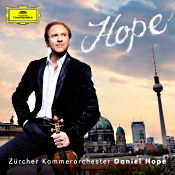
“Hope is being able to see that there is light despite all of the darkness.” --Desmond Tutu

“Music has a tremendous power. This album is my attempt to send out a ray of hope and to provide people, myself included, with a sense of support and perhaps even consolation.” --Daniel Hope

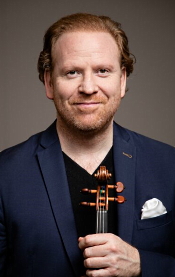
For those few who may not, perhaps, be completely familiar with Daniel Hope, he is a South African-born classical violinist (b. 1973) of world renown who is also the Music Director of the Zurich Chamber Orchestra and the New Century Chamber Orchestra. He plays the 1742 "ex-Lipinski" violin by Giuseppe Guarneri del Gesu.

Hope conceived and recorded the present album during lockdown, 2020, and in it he attempts to produce “a highly personal, yet distinctive collection of timeless classics by Schubert, Elgar, Part,” (and others). A booklet note continues, saying “Music was one of the first things to which people turned impulsively during the first coronavirus lockdowns in the spring of 2020.... Making music and in particular singing brought the world closer together after social distancing had created greater barriers than ever before.”

So, it’s music of hope. Music of trust. Music of promise. Music of expectation for all of us to come together. To that end, it includes works by Ariel Ramirez, John Dowland, Franz Schubert, Remo Giazotto, Bechara El-Hkoury, Arvo Part, Edward Elgar, Stephen Foster, and Fabian Andre, as well as traditional selections like “Danny Boy” and “Amazing Grace.”

Although it may seem like a kind of eclectic approach for a theme album, incorporating as it does a number of short, sometimes seemingly disparate works, it amply displays Mr. Hope’s expressive violin playing and his sincere intent. Accompanying Mr. Hope in the various pieces are the Zurich Chamber Orchestra; Ensemble Amarcord; organist Katta; clarinetist Patrick Messina; pianist Jacques Ammon; baritone Thomas Hampson; pianist Julia Okruashvili; harpist Marie-Pierre Langlamet; vocalist Colin Rich; and the Palau de la Musica Vocal Quartet.
The album begins with Misa Criolla (“Creole Mass” or “Native Mass”) by Argentine composer Ariel Ramirez (1921-2010), here arranged for solo violin, vocal quartet, charango (a ten-stringed mandolin), guitar, percussion, and string orchestra. The Paulau de la Musica Vocal Quartet, various instrumentalists, and the Zurich Chamber Orchestra accompany Mr. Hope. Appropriate to the album’s theme, Ramirez said he wrote the Mass as a “spiritual” piece designed to express humanity’s hopes of a better world. At a little over twenty minutes in length, it is also the longest selection on the program. Hope’s violin tone is plaintive yet uplifting from the outset. The quicker-paced succeeding movements are more spirited affairs with more-obvious Hispanic influences. It’s a splendid piece, well played, and well recorded.

The next selections are short songs arranged for violin and vocal ensemble. The first of these is Time Stands Still by English composer John Dowland (1563-1626), and the second is Die Nacht by Franz Schubert (1797-1828). In both, the Ensemble Amacord accompanies Mr. Hope. Although these works can be a bit mournful, they convey a lovely sentiment, with Mr. Hope’s violin adding a heartwarming quality to the proceedings. The Schubert is downright tear-jerking.

Then we get a longer, instrumental work, the famous Adagio in G minor by Remo Giazotto (1910-1998), with Mr. Hope, organist Katta, and the Zurich Chamber Orchestra. Giazotto always contended he transcribed the Adagio from a long-lost manuscript by the Italian Baroque composer Tomaso Albinoni (1671-1751), but that claim remains in doubt. Whatever, we get a terrific account of it here, neither too sentimental nor too matter-of-fact. It glides smoothly along on the back of Katta’s organ passages, with a rather forward part for the soloist.

Mr. Hope rounds out the album with over half a dozen shorter works: Byblos, the Old City by Bechara El-Khoury; Spiegel im Spiegel by Arvo Part; Nimrod from the Enigma Variations by Edward Elgar; “Dream a Little Dream” by Fabian Andre and Wilbur Schwandt; “Ah! May the Red Rose Live Alway” by Stephen Foster; and two traditional songs, “Danny Boy” and “Amazing Grace.”

In short, it’s an endearing album, if perhaps more than a tad on the solemn side. Still, the music is so beautiful and so beautifully performed, one cannot help going away impressed and, yes, hopeful.

Producers Christoph Classen and Tobias Lehmann and engineer Rene Moller recorded the music at XKO-Haus, Zurich and Teldex Studio, Berlin in July, September, and December 2020. The sound exhibits excellent transient response and dynamics, with clear percussion and strong bass. The engineers ensure the violin is well integrated with the rest of the instruments and voices, not too  recessed nor too far out front. The overall tone is a trifle soft, which is better than its being too bright or edgy, yet it maintains good, lifelike definition. It’s a pleasantly listenable disc, as are most of the DG recordings I’ve heard lately.

JJP

To listen to a brief excerpt from this album, click below:

December 8, 2021

Recent Releases, No. 22 (CD reviews)

By Karl W. Nehring

Arnold: Complete Symphonies and Dances. (CD1) Symphonies Nos. 1 & 2; (CD2) Symphonies Nos. 3 & 4; (CD3) Symphonies Nos. 5 & 6; (CD4) Symphonies 7 & 8; (CD5) Symphony No. 9; Sir Malcolm Arnold in Conversation with Andrew Penny; (CD6) English Dances, Set 1; English Dances, Set 2; Four Scottish Dances, Op. 59; Four Scottish Dances, Op. 91; Four Irish Dances; Four Welsh Dances. Andrew Penny, National Symphony Orchestra of Ireland (Symphonies), Queensland Symphony Orchestra (Dances). Naxos 8.506041.

October 21, 2021, marked the 100th birthday of the late British composer Sir Malcolm Arnold, one of the greatest yet most overlooked composers of the 20th century. Even in the UK, his music is seldom performed in concert, which is a shame. I was going to say that I first became acquainted with his music thanks to a recommendation by the late Harry Pearson of The Absolute Sound, who wrote with enthusiasm of an EMI LP featuring Arnold conducting the City of Birmingham Symphony Orchestra in Arnold’s Symphony No. 5 and Peterloo Overture, the first LP I ever ordered from England. But that was not, as I now recall, my first exposure to the music of Arnold; instead, my first exposure had actually come many years before, when my father took me to see the film The Bridge on the River Kwai, for which Arnold had composed the memorable score. (The film featured a young Alec Guinness, who many years later I would take my own kids to see play the role of Obi-Wan Kenobi, and would some years after that delight me with his portrayal of George Smiley.) Thanks to Naxos, though, who have decided to mark the occasion of this centennial year with a budget-priced boxed set of his complete symphonies and dances, music lovers now have the chance to immerse themselves in the symphonic music of this most remarkable composer for a most reasonable price.

Arnold had played trumpet in the London Symphony Orchestra; he knew orchestras and loved writing music for them. His symphonies contain melodies and tunes that musicians enjoy playing and listeners enjoy hearing. But no, his music is not simple. It is varied and complex, shifting from mood to mood, sometimes turning on a dime, but never leaving the listener behind. It can go from a tickle to a tear within a matter of measures. But it is always listenable, always colorful, ever imaginative. In a nutshell, the first couple of symphonies are on the bold and brash side, yet not without their moments of reflection. Nos. 3 and 4 are a bit more exotic sounding, especially No. 4., which makes lively use of percussion in places.

Symphony No. 5, the work that Harry Pearson raved about, is often considered Arnold’s masterwork; indeed, it is a symphony that cannot help but make an indelible impression. Its sound is rich and varied, with memorable contributions especially from the brass section, with some trombone parts that will haunt your memory. It is the quintessential Arnold symphony, packed with gorgeous melodies but still managing to be tense, restless, and disturbing under the surface. It is a great work, one that deserves a place in the concert hall. Its discmate, No. 6., is a shorter work (24:41) in three movements, said to be inspired by jazz but communicating a more serious, focused tone than his previous symphonies.

Nos. 7 and 8 are even more serious in tone, but still display that same Arnold sound, that ability to weave phrases and melodies that linger in the memory and tug at the heartstrings of the listeners without ever sounding cloying or sentimental, punctuated with bursts of energy, especially from the bass drum. The opening measures of No. 8 will definitely give both your speakers and your emotions a workout! But then the second movement Andantino will ply on your emotions in a quieter but no less powerful way, setting the stage for the final movement, and energetic romp that by now you will recognize sounds like pure Malcolm Arnold as it shifts gears and moves merrily along. Then we come to Symphony No. 9, Arnold’s most enigmatic symphony. The April 2021 issue of BBC Music Magazine featured an article on Arnold, and displayed his portrait on the cover, alongside which was a teaser that read, “Malcolm Arnold: Was the talented but troubled composer England’s Shostakovich?” That’s the kind of thing you expect to see while standing in the checkout line at the grocery store, and a bit of baloney overall, but listening to the 9th does admittedly invite the comparison to the great Russian composer. Its structure is unusual and yes, Shostakovich-like: three relatively short movements followed by a long (23:10) Lento finale that is serious and brooding. But still, as much as it might remind one of Shostakovich, it remains clearly a work by Arnold. A welcome bonus is the appended interview, in which conductor and composer discuss the work. Much different in mood and most rousingly Arnold-like are the sets of Dances gather together on the final disc in this set. These works are an unabashed delight, tuneful and tasty. It was certainly generous of Naxos to include them here along with the symphonies.

Please rest assured that although this is a budget release, the playing and the engineering are all first-rate. The booklet included in the box gives some background on the symphonies and is prefaced with a reflection about the music and the composer by conductor Andrew Penny. I will confess to being a huge fan of Arnold’s music; I have previously purchased recordings of all of his symphonies (and numerous other works) by several orchestras on several labels, including the individual Naxos discs as they were released during the 1990s. To have this set together in one box, along with the complete Dances (the first time all of his Dances have been recorded together), so well done and at a reasonably low price, makes this set a must-have. Arnold’s music is a musical universe begging to be explored by those who have not yet entered it, and now Naxos has provided the portal key. Enter and enjoy!

Of All Joys. Arvo Pärt (b. 1935): Summa; Luca Marenzio (c. 1535-1599): Solo e pensoso; John Dowland (1565-1626): Flow My Tears (Lachrimae); Orlando Gibbons (1583-1625) Fantasia a 6 in d minor; Philip Glass (b. 1937): String Quartet No. 3 “Mishima”; John Bennet (c. 1575 - c. 1615): Weep, O Mine Eyes; Jacobus Clemens non Papa (c.1510 - c. 1555): Ego Flos Campi a 7; Pärt: Fratres. Attacca Quartet (Amy Schroeder and Domenic Salerni, violins; Nathan Schram, viola; Andrew Yee, cello). Sony Classical 19439936062.

The Attacca Quartet have assembled a musical program of works from the 16th and 20th centuries that flows seamlessly from one musical delight into another, truly testifying to the listener of all joys indeed: the joys of life, the universe, and everything. The disc begins and ends with string quartet arrangements of familiar works by the beloved Estonian composer Arvo Pärt, Summa and Fratres. As with much of Pärt’s music, both pieces have a spiritual dimension to them. That feeling of calm and inwardness carries throughout the program, which is not always quiet and soporific, but in general has a feeling of grace about it. It is revealing to hear how naturally the music of Philip Glass blends so seamlessly into the program. Yes, listeners familiar with his compositional style will recognize that pulsing undercurrent, but they will also come to hear that over 500 years, music still remains music, the tones and the rhythms and the attendant emotions are still there, still flowing, still touching our hearts and minds. The Attacca Quartet’s violinist Domenic Salerni remarks of Glass’s music that “using an extreme economy of means, he creates moments and momentums out of simple whole-number harmonic ansd rhythmic ratios that can leave one feeling resigned and despairing, uplifted and filled with joy, or simply at peace and transported to a place of beauty.” The liner notes go on to assert that “this album seeks to replicate such emotional breadth. And while the textures and harmonies of Glass were a natural and obvious fit, the record is a project that began with the quartet listing off their favorite minimalist and Renaissance pieces, and considering how modern works resonate with what came before.” The end result is an album that should resonate with listeners seeking to engage with the beauty that can be found in simple music with surprising depth.    

Vince Mendoza: Freedom Over Everything. Concerto for Orchestra: American Noise; Concerto For Orchestra: Consolation; Concerto For Orchestra: Hit The Streets; Concerto For Orchestra: Meditation; Concerto for Orchestra: Justice And The Blues; Freedom Over Everything; Concerto For Orchestra: Finale; To The Edge Of Longing; New York Stories (Concertino for Trumpet and Orchestra). Antonio Sanchez, drums; Joshua Redman, tenor saxophone; Derrick Hodge, bass; Jan Hasenohrl, trumpet; Tariq Trotter (a.k.a. Black Thought), vocals; Julia Bullock, vocals; Alexej Rosik, violin; Vince Mendoza, Czech National Symphony Orchestra. Modern Recordings 538668092.

This recent release from the Grammy award-winning American composer, arranger, and conductor Vince Mendoza (b. 1961) features music that hovers in a space that is not quite classical, not quite jazz, not quite film music, not quite protest music, but which blends elements of all those genres and more into a program of energetic and entertaining orchestral music mingled with other styles and voices. The featured work is his Concerto for Orchestra, about which he explains, “My approach is a departure from the traditions of an orchestra concerto. For me, it was more about having an arc that tells a particular story, but also incorporates rhythmic and melodic aspects of African American music and improvisationCoinciding with the composition of the concerto was the 2016 saga of the election of ‘45’ and the resulting tremendous discord in the U.S. during that time. While writing this piece, the events happening in our country invaded my artistic space. For the first time I felt I couldn’t really write music and be removed from what was going on in our environment.  I started seriously considering the importance of an artist to reflect the times and how I could make my music a reflection not only of what I was witnessing but what I hoped would occur. So that’s when the arc of this concerto started to take shape. I sought to design the structure of the concerto to be inspired by M.L. King’s remarks on the moral universe, that the arc is long, but it bends toward justice. The beginning of the concerto (the first movement is called ‘American Noise’) reflects the discord that began leading up to the 2016 election. Of course, it pales in comparison to what we dealt with in 2020 and now 2021, but the arc of the composition goes through that process of pure noise, much needed consolation and the need for ‘hitting the streets’. The end of the concerto seeks to reflect justice and the hope for a peaceful resolution to what we were only entering in 2016. Arguably in 2021 we still haven’t quite gotten there.”

The Concerto is in six relatively short movements, the longest being the opening American Noise at 9:47, all the way down to the Finale at only 2:17. Between the fifth movement (Justice and the Blues) and Finale, there is a brief (1:27) interlude (Freedom over Everything) featuring rapper Black Thought. Drummer Antonio Sanchez, who has played with guitarist Pat Metheny and other jazz notables as well as leading ensembles of his own, adds a complex texture to the music as he comes in to join the orchestra along with electric guitar and later, the saxophone of veteran reedman Joshua Redman. The music has plenty of drive and energy, even in its less boisterous moments, with a kinetic feeling of motion to that suggests it would serve well as the score for a modern dance presentation.

Following the turmoil of his Concerto, Mendoza then presents music meant to calm, a setting of verse from the German poet Rilke titled To the Edge of Longing, featuring the rich soprano voice of Julia Bullock accompanied by the solo violin of Alexej Rosik and the orchestra. It truly is a beautiful work, flowing and melodic. The program concludes with New York Stories, a brief concertino for trumpet and orchestra that finds Mendoza returning to the jazz-tinged sound of the Concerto. The drums return, and on the whole, there is something of a film score vibe to this music, especially the sound of the orchestral strings. The end result is pleasant, but at least to these ears, not as striking as the other two works on the program. As far as the engineering goes, frequency balance and imaging are fine; however, be forewarned that this CD is mastered at a level that is clearly several dB higher than the norm for classical recordings, so you will want to back off a few notches on your volume control when auditioning it for the first time. You can always turn it up later, and well you might want to for such exuberant music, but better safe than sorry at the start…

Bach: The Art of Fugue. Les InAttendus (Vincent Lhermet, accordion; Marianne Muller, 7-string bass viol; Alice Piérot, violin). Harmonia Mundi HMM 905313.

Although modern scholarly consensus is that Bach’s The Art of Fugue was originally intended by the composer to be played at the keyboard, as with many other of Bach’s compositions, there have been many other transcriptions and arrangements performed and recorded over the years. Although my favorite is the organ and piano version by Glenn Gould, I have also enjoyed a string quartet version by the Emerson String Quartet, and have at times enjoyed and at other times loathed that infamous Bach/Malloch Sheffield production titled The Art of Fuguing. This new release for the unusual combination of violin, accordion, and bass viol gives the music a baroque sonority, yet because of the unfamiliar element of the accordion blending with the strings, there is a freshness to the sound that makes it piece seem new again. No, this is not a CD for everyone, but for devoted fans of J.S. Bach, it is well worth an audition.

Bonus Recommendation:

How Shostakovich Changed My Mind. Johnson, Stephen. Notting Hill Editions Ltd (2018).

Especially for – but certainly not only for – fans of the music of the great Russian composer Dmitri Shostakovich, this brief book of just over 150 pages offers some fascinating insights into his music. It does so not by presenting dry academic musicological analyses, but rather by offering penetrating personal insights into not only the composer and his music, but also into the effects his music can have upon those who listen with real purpose. As the note on the back cover explains, “music broadcaster and composer Stephen Johnson explores how Shostakovich’s music took shape under Stalin’s reign of terror, and how it gave form to the fears and hopes of an oppressed people. Johnson writes of the healing effect of music on sufferers of mental illness and tells of how Shostakovich’s music lent him unexpected strength in his struggle with bipolar disorder. Through interviews conducted with surviving members of Soviet orchestras, through his reading of philosophers, psychoanalysts, and neurologists, Johnson paints a compelling picture of one man’s music and its power to validate and sustain another man’s life.”

Now, that talk of philosophers and neurologists and psychoanalysts might make it sound as if this book might be a dense, heavy read, quite the opposite is true. Instead, Johnson is a skilled storyteller, and he weaves together a number of different threads – his own story, accounts of his interviews, his accounts of some of Shostakovichs’s compositions (including the Cello Concerto No. 1, String Quartet No. 8, Symphonies Nos. 4, 8, and 11) and how they affected his mental health and overall well-being – into a compelling story that is not just about Shostakovich, or music, but about the human condition and the challenges we all face as we make our way through life. Especially fascinating – offering insights both musical and psychological – are some interviews and analyses that reveal some of the hidden messages that Shostakovich wrote into his music, his way of taunting his tormentors without exposing himself openly to further persecution. This is a little volume that can easily be read in a day or two, but with a message that will resonate in readers’ hearts and minds for far longer.

KWN

June 9, 2021

Recent New Releases, No. 9 (CD Mini-Reviews)

By Karl W.
Nehring

Albores: Dino Saluzzi, bandoneon. ECM 2638 774
7754.

Dino Saluzzi
(b. 1935) is a master of the bandoneon, an accordion-like instrument most often
associated with the tango. However, the music on Albores, consisting of
nine compositions by Saluzzi, is not tango music, as we can infer from a glance
at the back cover. The title of the first track, Adiós Maestro Kancheli, is
a reference to Georgian composer Giya Kancheli (1935-2019), whose music was
sprawling, eruptive, disruptive, and highly charged. Saluzzi’s dedication
reads: “Dear Maestro and friend, your wonderful music will always remain with
me. It was a great honor to get to know you.” This and the other eight
compositions on Albores are in a serious, probing, deeply reflective
vein, drawing the listener in as if listening to an intense movement from a
late Beethoven string quartet or Schubert piano sonata. Saluzzi is not dashing
off tunes for mere entertainment, but making music for contemplation and
aesthetic uplift. Beautiful, inspiring music; however, every rose has its thorn
– the sound of the bandoneon, while rich and complex in its own way, also
includes clicking and popping from the keys and buttons that may cause you to
think your CD player is mistracking at times. If you can get past that, you
will be richly rewarded.

Arvo Pärt: Miserere.
Which Was the Son of…; Festina lente; Tribute to Caesar; Sequentia;
The Deer’s Cry; Miserere; And I Heard a Voice…. Howard
Arman, Chor des Bayerischen Rundfunks; Münchner Rundfunkorchester;
oestereichisches ensemble fuer neue music. BR Klassik 900527.

One of the
consolations of having to spend so much time at home because of the pandemic
has been the opportunity to have more time to enjoy beautiful recordings such
as this. The choral music of Estonian composer Arvo Pärt (b. 1935) is always a
joy to hear, and especially so when it is so expertly performed and recorded as
it is on this new collection featuring the Bavarian Radio Chorus. And speaking
of the pandemic, the liner notes explain the ‘Happy Birthday, Arvo Pärt!’ was
the title of the first choir subscription concert of the 2020/21 season, at
which Pärt’s 85th birthday was to have been celebrated – with the
composer himself actually present. Indeed, it could have been a double
birthday, since the Bavarian Radio Chorus is also celebrating its 75th
anniversary. But everything turned out differently. Arvo Pärt stayed at home,
as did the concert audience. The singers and their artistic director Howard
Arman remained at their posts, albeit with the respectful social distancing
required by the coronavirus. Also on hand behind their glass screens, were the
sound engineer and his team, who recorded a significant part of the present CD
edition.” Although it may have been a big disappointment not to have a live
concert, in the end we music lovers at home have ended up being the
beneficiaries, as the resultant recording, with all but the performance of Miserere
being captured in studio settings rather than live concert performances,
are extremely well recorded, making this release a sonic as well as musical
delight. The excellent liner booklet that includes texts makes this a
first-class release in every respect.

Glass: Les
Enfants Terribles; Etudes Nos. 17 and 20
. Katia and Marielle LaBéque,
piano. Deutsche Grammophon 4855097.

Katia (b.
1950) and Marielle (b. 1952) Labèque are French sisters who have been making
recordings and performing for more than five decades across a variety of
genres, even including a stint with jazz guitarist John McLaughlin, with whom
Katia was romantically linked for several years in the 1980s. The sisters  have played jazz, baroque, ragtime, and both
mainstream and contemporary classical music. In 2005, they performed the world
premiere of Philip Glass’s Double Concerto for two pianos, which the
composer dedicated to the sisters. More recently, Glass requested that his
longtime collaborator and arranger Michael Riesman put together a two-piano
suite based on Glass’s opera Les Enfants Terribles. Those familiar
with the music of Philip Glass know that he falls into the “minimalist” camp;
however, this suite for two pianos is in places boisterous, dramatic, and
exciting, played with flair and power, while at other times reflective and
brooding, played with sensitivity and finesse. For a video glimpse of the
sisters playing this music, you can catch a glimpse here. The
program is rounded out with solo performances by Marielle of Glass’s Etude
No. 17
and Katia of his Etude No. 20. The former is charming,
expressive – Glass’s piano music shows him at his best – while the latter seems
to reveal another dimension of expression that transcends minimalism, Glass’s music
extending into another dimension and bringing the listener along for the
ride.  

Songs
from Home
: Fred
Hersch, piano. Palmetto PM2197.

This is
another of those musical efforts that in some respects we owe to the COVID-19
pandemic. Jazz pianist Fred Hersch recorded this solo piano album in his own
home on his own piano and is now sharing it with us for our enjoyment while we
are still trying to get the upper hand in our ongoing battle with the
coronavirus. This truly is an entertaining collection of music both familiar,
with renditions of tunes including but not limited to  “Wouldn’t It Be Loverly,” “Wichita Lineman,” Joni Mitchell’s “All
I Want,” and an original by Hersch. The piano he uses is not perfect, but the
resultant sound just adds to the personal feel. The music is familiar, although
played with a personal flair, and the overall feeling is one of great intimacy
and direct communication. I played it one evening when my wife was at home, and
from the other room she commented, “that CD you’re playing makes me feel like
we are having a nice dinner at a fancy restaurant with a really good piano
player taking requests and making sure everybody is having a memorable evening.
That’s really nice – who is it?” Yes, Songs from Home truly is a
feel-good CD, and by the time you get to the final cut, “When I’m Sixty-four,”
you will have had a memorable listening experience thanks to the musical
mastery and communicative spirit of Maestro Hersch.

Vida
Breve
:
Bach/Busoni: Chaconne from Partita No 2 in D minor BWV 1004; Chopin: Piano
Sonata No. 2 in B flat minor;
Liszt: Funérailles from Harmonies
poétiques et religieuses
; Bagatelle sans tonalite; Busoni: Kammer-Fantasie
über Carmen
; Hough: Piano Sonata No. 4Vida Breve’:
Traditional/Hough: Arirang. Steven Hough. Piano. Hyperion CDA68260.

As you might
be led to infer by the titles of the CD itself and some of the selections, and
the inclusion of the Chopin funeral march, this program by British pianist
Stephen Hough is not all sweetness and light. That said, there is beauty to be
found here, in the music, the playing, and in the recorded sound, which is a
bit on the distant but warm side, which seems just right for the reflective
mood that Hough seems to be inviting us to enter as we contemplate one of the bedrock
certainties of life, as he explains: “People are often reluctant to talk about
death… but in the world of the arts – in painting, literature, and music –
death has always been a central subject resulting in the most exalted and
inexhaustible expression, the image of a dead man hanging on a cross arguably
the fundamental icon of Western culture… On this recording I wanted to explore
some pieces that have this theme as part of their identity or inspiration.” But
no, you do not have to ponder your mortality as you listen to this recording,
for this is beautiful music that can be enjoyed for what it is, beautiful
music, beautifully performed and recorded, bringing joy to your life for 78
beautiful minutes.   

Villa-Lobos: Choral
Transcriptions.
Mendelssohn: Lieder ohne Worte, Book 2-No.9 in E major;
Bach: Prelude and Fugue No. 8 in E flat minor/D sharp minor BWV 853;
Schumann: Traumerei; Bach: Fugue No. 1 in C major, BWV 846;
Schubert: Ständchen; Bach: Fugue No. 21 in B flat major, BWV 866;
Chopin: Waltz No. 7 in C sharp minor; Bach: Prelude No. 22 in B flat
minor, BWV 867;
Rachmaninov: Prelude in C sharp minor; Bach:
Prelude no. 14 in F sharp minor
, BWV 883; Massenet: Élégie; Bach: Fugue
No. 5 in D major, BWV 874
; Beethoven: Piano Sonata No. 8 ‘Pathétique’ –
II. Adagio cantabile
; Villa-Lobos: Bachianas Brasileiras No. 9 (version
for choir).
Valentina Peleggi, São Paulo Symphony Choir. NAXOS 8.574286.

From 1933 to
1935, Brazilian composer Heitor Villa-Lobos (1887-1959) created a number of
transcriptions of classical music compositions by other composers in
arrangements for a cappella choir, especially of the Preludes and Fugues
from Bach’s The Well-Tempered Clavier. As you can see from the
selections listed above, this recording by the São Paulo Symphony Choir under
the direction of Italian conductor Valentina Peleggi places an emphasis on the
latter, with a number of Bach selections seasoned with some selections by other
familiar figures, and ending with a choral version of one of Villa-Lobos’s own
Bach-inspired compositions, his Bachianas Brasileiras No. 9, which the
composer dedicated to American composer Aaron Copland. Most of the
arrangements are for wordless choir; only the Schubert and the Massenet
selection feature lyrics, which are presented in the liner booklet. Although
some readers might be led to think of something like the old Swingle Singers
recordings of Bach, this is something much different, as the choir is much
larger and the arrangements are much more complex and nuanced than those of the
Swingles (not to knock them, they were great fun). Having the Bach arrangements
run as a thread throughout the program gives it weight and body, while having
the other arrangements provides variety and color. Hearing a melody with which
you are familiar from having heard on the piano (for me, it was the Rachmaninov
Prelude in C sharp minor) sung by this large choir is a transcendent
moment, sure to bring a shiver and a smile. This is a truly delightful
recording that should appeal to a wide variety of music lovers. The recording
quality is just fine, offering a sense of space without the overly resonant
muddiness that mars some choral releases.  

KWN


December 2, 2020

Two Contemporary Choral Recordings (CD reviews)

Works
by Pärt, Vasks, MacMillan, and Runestad

By
Karl W. Nehring

Presented
for your musical enjoyment are two recent releases of choral music, the first
comprising works by three composers whose names should be familiar to most
music lovers, the second by a composer whose name is less likely to be known.
The first features music traditionally religious in nature, while the second is
more literary in orientation but not exclusively secular. Indeed, both releases
are quite capable of lifting listeners’ spirits. To look at them both together
is to see a kind of quick candid snapshot of current approaches to contemporary
choral composition, performance, and engineering.

Stabat: Includes works by Arvo
Pärt, (Da Pacem, Domine; The Woman with the Alabaster Box; Magnificat; Nunc
Dimittis; Stabat Mater); Peteris Vasks (Plainscapes); James MacMillan
(Miserere). Graham Ross, Choir of Clare College, Cambridge; The Dmitri
Ensemble. Harmonia Mundi HMM 905323.

Estonian
composer Arvo Pärt, (b. 1935) is the featured composer on Stabat, which
includes five of his compositions. By now, most classical music lovers should
be familiar with his music, as his compositions have been recorded by myriad
performers on a variety of labels. For those of us of a certain age, though,
Pärt, was a newcomer who suddenly appeared on the scene with music unlike
anything we had ever heard before. I can still vividly recall the first time I
heard his music. While I was in graduate school, I had a weekend job as a
security guard for Liebert Corporation, a manufacturer of computer support
equipment that at that time basked in having recently been named one of the
“100 Best Companies to Work for in America.” One of my late-night duties was to
drive from my post at the main plant to check on their training center, which
was a couple of miles or so away. On one of those late nights as I got into my
car I found that the classical FM radio station was playing something
completely engrossing, music such as I had never experienced before. I was
spellbound! I sat and listened to the end of the piece, eager to find out what
this music could possibly be. It turned out to be the landmark ECM release Tabula
Rasa
, featuring the music of Arvo Pärt as played by the then-young
violinist Gidon Kremer and of all pianists, the jazz icon Keith Jarrett (who,
sadly enough, has suffered a couple of strokes over the past couple of years
and is  no longer able to play the
piano). Since then, I have been an avid Pärt fan (as well as a fan of Kremer
and Jarrett) and have auditioned and owned many of his numerous compositions
over the past several decades.

All
of the Pärt, compositions in this collection have been recorded before,
typically several times, but that does not diminish the quality or appeal of
the performances on this CD by the Choir of Clare College, Cambridge. As a
bonus, the inclusion of striking compositions of a similar musical and
emotional appeal by the Latvian composer Peteris Vasks (b. 1946) and the
Scottish composer James MacMillan (b. 1959) makes for a coherent, vibrant, and
entertaining program.

The
program kicks off with two Pärt compositions for choir alone. Da pacem,
Domine
was commissioned by the Catalonian conductor Jordi Savall (whose
recent set of Beethoven Symphonies Nos. 1-5 figures prominently in my
“get those reviews finished, darn it!” pile). Pärt started writing it
two days after the Madrid bombings in March 2004, and it has been performed
commemoratively in Spain every year since. The stirring chords playing off
against each other are like tolling bells, moving and memorable. The next
piece, The Woman with the Alabaster Box, features more of a traditional
choir sonority, rich in reverberation as captured by the engineers. Pärt has an
admirable ability to employ stillness as an expressive tool  The soft descent into silence at the end of
the piece is a marvel to behold.

Plainscapes by Vasks augments the
sound of the choir with expressive support from violin and cello. The opening
finds the choir joined by a high note from the violin, the violin then sliding
into a haunting, almost spooky sound. At times, the two string instruments take
the lead, spinning searching sounds that the choir supports and sustains with
soft, tender accompaniment. There are no words, as the choir does not sing a
text but rather employs vocalise throughout. Even without any sort of liturgical
text, the net effect is nonetheless reverential.

Following
the Vasks are two more pieces by Pärt, the choir once again singing a cappella.
His setting of the Magnificat features rich harmonies weaving between
male and female voices to create a reverential atmosphere capable of providing
consolation and hope in these turbulent times for believers and nonbelievers
alike. Oh, the healing power of great music! Nunc dimittis starts softly
and slowly. As it proceeds, however, it builds in volume and intensity.

MacMillan’s
Miserere seems to have a sound especially adapted to the acoustics and
resonances of its physical setting. Simple vocal lines flow over each other,
but are woven together in a more complex constitution than in the previous
pieces in this program. The overall sound is larger, more complex—it is easy to
imagine this as a work for orchestra. The ending is especially noteworthy for
the way it winds down so skillfully and effectively.

The
program closes with this recording’s longest (27:27) and most complex
composition, Part's setting of the Stabat Mater. It opens with
the strings alone, the choir not joining in for more than two minutes. And so
the composition moves along, choir and chamber orchestra weaving in and out,
intermingled with that silence so appropriate for his musical setting of a text
that depicts the grief of Mary at Calvary.

All
in all, this fine Harmonia Mundi CD, although with music rooted firmly in
Christian liturgy, possesses musical and sonic excellence that can surely be
appreciated by even the most secular of music lovers. Even if you already own
recordings of some or even all of the Part compositions featured in this
collection, the inclusion of the Vasks and MacMillan pieces, both of which are
truly impressive, makes this release well worth seeking out. The engineering is
excellent and the liner notes are useful. A first-class release in all
respects.

Jake
Runestad: Sing, Wearing the Sky. Includes The Secret of the Sea;
Alleluia; Let My Love Be Heard; Sing, Wearing the Sky; Live the Questions; We
Can Mend the Sky; Fear Not, Dear Friend; Proud Music of the Storm; I Will Lift
Mine Eyes; Ner Ner. Joel Risema, Kantorei. Naxos 8.559892.

The
Secret of the Sea

is the opening selection of this collection of choral music by Jake Runestad
(b. 1986), a young American composer who was born in Illinois and now resides
in Minnesota. It is an ambitious work that incorporates texts from Whitman,
Longfellow, Doolittle, and Uvavnuk. It is hard to listen to the opening
measures without thinking of Vaughan Williams’s Symphony No. 1 (A Sea
Symphony)
, not because Runestad is imitating RVW, but because the lyrics by
Whitman and the exuberance of the music are similar in both pieces. The musical
mood shifts as Runestad moves from text to text, but is always engaging and
colorful, with the sound of the choir being accompanied by strings, percussion,
and piano. The text for the next selection is much simpler, consisting entirely
of one word, the tile of the piece, Alleluia. The performance by the
unaccompanied singers is bursting with energy, culminating in a big finish.
Also sung a cappella is the third selection on the program, Let My Love Be
Heard
, which the liner notes point out “became a powerful expression of
collective grief and solidarity following terrorist attacks in Paris and
Beirut.” The choir director at Cal State Long Beach led a performance of the
work as part of a memorial to a student of the college who had been killed in
the Paris attacks, a performance that was posted online and has become music
sung to provide solace and comfort for subsequent tragedies. It is a tender
piece in which Runestad has framed the poem “A Prayer” by Alfred Noyes in rich
harmonies that truly do provide balm for the soul.

The
mood shifts once again for the title number, Sing, Wearing the Sky, with
lyrics by Lalla, a 14th-century Sufi poet/mystic from India. From the cover art
on the CD I had a kind of metaphorical, abstract preconception of what the
title meant, but then I encountered the lines, “My teacher told me, live in the
soul. When that was so, I began to go naked, and dance. Dance, Lalla, with
nothing on but air. Sing, Lalla, wearing the sky.” That put a different spin on
things… As the piece proceeds, a violin adds a distinctly Indian vibe to the
sonority, with a mezzo-soprano voice telling the story accompanied by the choir
as well as the violin, piano, and percussion. The net effect is dramatic, the
listener really feeling the spirit of the dance. The next selection, Live
the Questions
, offers life advice of a different sort, with lyrics taken
from a letter that Rilke wrote to a young cadet in the Austrian army who had
sought Rilke’s advice on some life decisions he was facing. The musical setting
has turned to the more serious side once again, with some tender harmonies
culminating in a memorable final chord.

The
next cut, We Can Mend the Sky, starts with a bang as drums accompany the
chorus. As the lyrics (written by a 14-year-old Somali girl in response to
violent riots she had witnessed in her homeland) unfold, a solo soprano sings
the story with the choir accompanying her. There are some dramatic moments, but
the earnest repetition  of the line, “if
we come together, we can mend the sky” seems to be a bit over the top, a few
too many overly earnest repetitions, at least for my taste. I hope I am not being
too cynical (hey, 2020 has been a hard year for us all). In any event, the next
selection, Fear Not, Dear Friend, from a poem by Robert Louis Stevenson,
features rich harmonies that underscore the imploring loving tenderness of
Stevenson’s touching words of support. The ending repeats the opening line,
effectively bringing about a feeling of emotional resolution. The next
selection, Proud Music of the Storm
with lyrics by Walt Whitman, also seems to a kind of repetition, the
overall sound and sense echoing the CD’s opening cut, The Secret of the Sea,
the opening section of which also featured lyrics by that exuberant American
poet. The opening notes are from the piano, and as the chorus joins in, there
are shifting moods, breathing sounds, and the unfolding of the vison of an
unfettered mind. The overall effect is grandiose, yet on a personal scale.

The
penultimate composition, I Will Lift Mine Eyes, is Runestad’s setting of
Psalm 121. Runestad explains that “I came across Psalm 121 from the Bible and
found great beauty in the admiration for natural creation linked with a promise
of guidance and support from a higher power. I find such peace in the splendor
of the natural world and I wanted to capture that serenity with this work.” As
you might expect, the music is reverential and stately, sung with depth and
conviction by Kantorei. That serious mood disappears as the final selection
begins, Ner Ner being a highly energetic and rhythmically resplendent
rendition of nonsense syllables. A strange way to end the album, perhaps, but
certainly a fun way.

Overall,
Sing, Wearing the Sky is entertaining and enjoyable. The recording
quality is certainly good, maybe not audiophile quality but never off-putting.
There are times when I found myself wishing for less reverberation, but on the
other hand, it does add to the sense of hearing singers in a public space
rather than a studio setting. The liner notes are useful, with lyrics
included,  This Naxos release is well
worth an audition by fans of choral music.

Bonus
Recommendation:

Bruckner: Mass No. 3 in F minor. Margaret Price, soprano; Doris Soffel,
alto; Peter Straka, tenor; Matthias Holle, bass; Philharmonischer Chor Munchen;
Sergiu Celibidache, Munchner Philharmoniker (EMI 7243 5 56702 2 9)  In the category of choral music, here is
something special. Music lovers whose familiarity with the music of Anton
Bruckner is based solely upon hearing his symphonies may already have sensed a
spirit of religiosity in his music. His symphonies have been described as
“cathedrals in sound,” and movements such as the Adagio from his Symphony
No. 8
are certainly capable of stimulating transcendent thoughts and
feelings in listeners’ minds and hearts. But Bruckner was not just a
symphonist, he also wrote music in other genres, including three Masses, of
which this is the third. Conductor Sergiu Celibidache did not believe music
should be recorded, so he did not leave a recorded legacy like so many other
conductors. This EMI release is of a live concert, part of a series of live
recordings that have been given special care to make his music more available
to the public. It is music of great depth and beauty; oi deed, the structure of
the Mass and its text meant that Bruckner did not write the repetitious
melodies with the abrupt endings he employed in his symphonies. It is as if the
very limitations  involved in setting
the text to music are what freed him to compose some of his most beautiful
music. This is an utterly wondrous release, well worth seeking out.

KWN


January 9, 2019

Mirror in Mirror (CD Review)

Works by Ciupinski, Corigliano, Glass, Lauridsen, Pärt, and Ravel. Anne Akiko Meyers, violin; Akiro Egushi, piano; Elizabeth Bridges, keyboard; Jakub Ciupiñski, luthéal reproduction;  Kristjan Järvi, Philharmonia Orchestra. Avie Records AV 2386.


Welcome back a guest reviewer, Karl W. Nehring. For over twenty years Karl was the editor of "The $ensible Sound" magazine and a regular contributor to its classical review pages. Take it, Karl:


This new album by violinist Anne Akiko Meyers is a delightful combination of interesting music, splendid playing, excellent engineering, and even -- as an added and unexpected bonus -- thoughtful, helpful, and intelligent liner notes. If only more music releases were so thoughtfully produced!


Although on the whole I have never been a big fan of the music of Philip Glass, I have found some of his smaller-scale works to be enjoyable. Meyers opens her program with an arrangement for violin and piano by Glass's frequent collaborator Michael Reisman of the composer's Metamorphosis II. Pianist Akira Eguchi and Meyers make this piece soar and sing. Indeed, the expression and passion these musicians bring to this music belie the reputation for boringly repetitious minimalism that Glass's music has accrued among many music listeners.


Interestingly enough, the liner notes mention that Metamorphosis II was influenced by Arvo Pärt's Fratres, the next cut on this CD. I have heard many performances of various arrangements of Fratres, including some for violin and piano as on this recording, but never have I heard a performance as strikingly virtuosic as this one. I would never have thought of Pärt as composing gypsy music, but there is a hint of that here, at least to these ears. Fascinating!


Next up is the title track, Spiegel im Spiegel ("Mirror in MIrror"), also by Pärt. Although simple on the surface, this truly is a composition with great depth of feeling, a deeply reflective piece, as implied by its title. Meyers mentions in the liner notes that she had worked closely with Pärt a few years ago while recording several of his compositions, an experience that provided her with an insight into both the composer and his music. Meyers and Eguchi play this music in a loving but straightforward way, allowing listeners to find their own reflections as they gaze into the music.


Anne Akiko Meyers

Although Meyers somehow managed to find a gypsy thread in the music of Part, she somehow manages to overlook the gypsy element in Ravel's Tzigane, which she plays in a straightforward manner that strikes these ears at least as lacking in the necessary passion and flair. An interesting aspect of this performance, though, is the inclusion of a digital recreation of the sound of a luthéal, which the liner notes explain is an optional piano attachment – now virtually extinct – that Ravel indicated could be used in performance. The percussive sound of the luthéal does add an intriguing dimension to the sound, but overall, this performance of the Tzigane is the least appealing track on this CD. It just sounds out of place, not quite consonant with the overall pensive, introspective mood of the rest of the program.


That more introspective mood is restored, however, with the next cut, a moving piece titled Lullaby for Natalie, which was written by composer John Corigliano at the request of Meyers's husband to play in honor of their at that time yet-unborn child. In Corigliano's liner note, he mentions that Meyers sent him a video of her playing the lullaby for baby Natalie, who was indeed asleep by the end of the piece: "The baby, awake at first, was asleep at the end, so either the 5-minute lullaby had bored her to sleep or I had lived up to the promise of my title. I will never know." Those who listen to this cut will not be bored to sleep but will rather be enchanted by its charms.


The next cut, Edo Lullaby, based on the traditional Japanese folk song "Edo No Komori Uta," is a composition for violin and electronics by Jakub Ciupiñski, who explains in his liner note that the opening quotes the original melody while the rest of the piece "represents my subjective interpretation of its spirit." The end result does not sound like a traditional lullaby – there are lots of electronic effects going on in the deep bass that would shake your woofers, not to mention your baby, wide awake. Perhaps this is what Ciupiñski has in mind when he writes, "it is my personal nod to the Zen tradition, which I think of as an ancient lullaby that makes you wake up." In any event, it is an interesting piece of music that fits well into the overall arc of the program.


The next cut, Wreck of the Umbria, is also by Ciupiñski, who explains that the title came from an underwater wreck in Sudan that he had explored back in 2005. The violin has a haunting sound, a mood augmented by electronic effects that truly do allow the listener to conjure up the mental image of a mysterious underwater realm. Although my brief description might give the impression that this is bizarre, forbidding music, it is actually quite enticing and eminently listenable.


Although the previous pieces on this album have been at chamber music scale, the program concludes with an arrangement for violin and orchestra (in this performance, the Philharmonia Orchestra under the baton of Kristjan Järvi) by composer Morton Lauridsen of his oft-recorded (e.g., as led by the late Robert Shaw on a marvelous Telarc recording with the same title) choral piece, O Magnum Mysterium. The sound of Meyers's violin floating above the orchestral cushion is a grand and fitting way to conclude this beautiful production, which is first-class in every respect.


KWN


To listen to a brief excerpt from this album, click below:


August 13, 2017

The Deer's Cry (CD review)

Music of Arvo Part, William Byrd, and Thomas Tallis. Harry Christophers, The Sixteen. CORO COR16140.


The juxtaposition of works on this album by modern Estonian composer Arvo Part (b. 1935) and Renaissance English composers William Byrd (c. 1540-1623) and Thomas Tallis (c. 1505-1585) may at first blush seem odd. Yet the combination works surprisingly well.


As almost everyone knows by now, The Sixteen and its founder and conductor Harry Christophers are a vocal and period-instrument ensemble founded by Mr. Christophers in 1977. They deal largely in Renaissance, Baroque, and early Classical repertoire but have obviously here expanded their scope to include modern music. With over 130 recordings and numerous awards to their credit, one can understand their critical and popular success.


Here are the track listings for the present album:

1. Byrd: Diliges Dominum

2. Byrd: Christe qui lux es et dies

3. Part: The Deer's Cry

4. Byrd: Emendemus in melius

5. Part: The Woman with the Alabaster Box

6. Byrd: Miserere mihi, Domine

7. Byrd: Ad Dominum cum tribularer

8. Tallis/Byrd: Miserere nostri

9. Tallis: When Jesus went

10. Byrd: O lux beata Trinitas

11. Part: Nunc dimittis

12. Byrd: Laetentur coeli

13. Byrd: Tribue, Domine


The total timing for the album runs very nearly sixty-seven minutes.


Harry Christophers

So, why include the music of Arvo Part among that of Byrd and Tallis? Well, although both Byrd and Tallis wrote some secular music, the bulk of their output was sacred. Byrd, for instance, wrote sacred music for use in Anglican and Catholic services, and Tallis (Byrd's teacher, by the way) worked at a Benedictine priory, Waltham Abbey, Canterbury Cathedral, and the Chapel Royal, among other places. And of Part? He, too, writes both classical and religious music. In fact, he is one of the most important and certainly one of the most prominent of today's composers of spiritual music. Yes, as I said, the combination of composers on the album works.


As always, The Sixteen sing in a heavenly manner, and their voices sound rich and full in harmony, their intonation flawless, and their commitment to the music as emotionally vibrant as ever. What we've got as a result is beautiful music, beautifully performed.


Now, what did I like best? That's hard to answer because everything about the music and the singing is so letter-perfect. Of course, the Byrd and Tallis pieces go without saying. Their music has stood the test of time and been enjoyed by and inspirational to people for centuries. However, Part's music in particular impressed me, starting with the album's title tune, The Deer's Cry. Like the other two of the composer's selections, it's partly new, partly old; partly modern, partly ancient. Obviously, Part is a man of many parts. Sorry. The Deer's Cry is an updated setting of an incantation written in the fifth century. It's appropriately solemn yet wonderfully uplifting. The Woman with the Alabaster Box sets a narrative from Matthew 26:6-13. But equally impressive is Nunc dimittis, written in Part's tintinnabular or bell-like style; it's beautiful, and as with the rest of the album the singers do it full justice.


Producer Mark Brown and engineer Mike Hatch recorded the album at the Church of St. Augustine, Kilburn, London in October 2015. Here is the only minor fly in the ointment: The venue is highly reverberant, and, consequently, voices sometimes appear to have a touch too much bloom and echo to them. Still, the ambient glow makes the choir sound more "heavenly," even it doesn't do as much to clarify the album's transparency as it could. There is also a slight upper midrange brightness to the sound, which doesn't hurt and probably actually helps make the voices appear more distinct. There is much to like here, so I'm not really complaining.


JJP


To listen to a brief excerpt from this album, click below:


February 10, 2014

Vivaldi: The Four Seasons (CD review)


Also, Concerto in F
for Three Violins; Part: Passacaglia. Anne Akiko Meyers, violin; David Lockington,
English Chamber Orchestra. eOne EOM-CD-7790.


What? Another one? Yet another Seasons? Wait for it: The last time I reviewed a disc from American
concert violinist Anne Akiko Meyers it was The
Bach Album
, which contained the equally ubiquitous Bach violin concertos. I
found the performances so good, I continue to recommend them in my “Basic
Classical Collection on Compact Disc.” Now we have her renditions of Vivaldi’s Four Seasons, accompanied by Maestro
David Lockington and the celebrated English Chamber Orchestra, and the
performances are almost as delightful as her Bach. While the music may be
shopworn from overuse, Ms. Meyer does them up in a lively and refreshing style.


Before commenting on the interpretations, though, there’s
an interesting note about the violin she uses for the recording. Ms. Meyers
usually performs on a variety of Stradivari, ones she either owns or has access
to use. This time, however, she uses the 1741 Vieuxtemps Guarneri del Gesu,
built, coincidentally, in the year of Vivaldi’s death. In 2013 an anonymous
buyer purchased the instrument for an unsurpassed amount of over $16,000,000
and announced that he would allow Meyers lifetime use of the instrument. Not
only do connoisseurs consider it one of the finest violins in the world, no one
has ever used it in the studio before; it makes its commercial recording debut
here.


Anyway, back to the Italian violinist and composer Antonio
Vivaldi (1678-1741). Although he wrote hundreds of pieces of music, folks
probably recognize him best for The Four Seasons, the little three-movement
tone poems with their chirping birds, galumphing horses, barking dogs, dripping
icicles, and howling winds. The composer meant them to accompany descriptive
sonnets, making up the first four concertos of a longer work he wrote in 1723
titled Il cimento dell'armonia e dell'inventione
(The Contest between Harmony and
Invention
). Most people hardly remember the other concertos in the set.


Under Ms. Meyer, the familiar Spring concerto is appropriately cheerful, made even more so due to
the violinist not overdoing anything in the piece. You won't find any
exaggerated tempos (although hers are quick and spirited in a refined manner);
no unusual dynamic contrasts; no extraordinary slowing down or speeding up for
dramatic effect. Ms. Meyers keeps everything moving along at a fairly
conventional, though stimulating pace. It's probably the way most listeners
want their Seasons--enjoyably
colorful and invigorating, without being annoyingly different just for the sake
of being different. The Largo, with
its meadows and fields, sounds properly peaceful, yet it never lags. And the
final Allegro capers along
cheerfully.


Throughout all of the music, Ms. Meyers's violin sounds
exquisitely gorgeous in tone and playing, and Maestro Lockington's
accompaniment with the ECO is precise and agreeable.


Summer gets an
even more highly characterized reading than Spring,
with the season's heat oppressive, the birds chatty, the wind picking up
nicely, and the threat of storm just a tad menacing. When the summer storm does
arrive, it does so in a whirlwind of energy. Very invigorating.


Ms. Meyer begins Autumn
a touch too energetically for my taste, but to each his own. The music soon
enough slips away into a fitting, if not altogether traditional-sounding
slumber. Then, the closing hunt goes well, if, oddly, a bit less animated than
I would have expected.


Winter has
always been my favorite segment of the Seasons,
with its icicles and frozen landscape, its hurrying to warmth, its delectable Largo by the hearth, and its final hints
of ice and chill outside. It's here that Ms. Meyers and company outdo
themselves in musical representation. As listeners, we should see and feel
these surroundings, and we do.


Coupled with The
Four Seasons
are Vivaldi's Concerto
for Three Violins in F major
, RV551, which makes a handy companion piece.
What is more out of the way is Arvo Part's Passacaglia,
which the composer wrote in 2003 for violin and piano and later arranged for
violin and orchestra as we find it here. It's true the music of the Baroque
period inspired Part to write the piece, yet it remains a curious choice to
complement the Vivaldi. Yet complement the Vivaldi it does, especially as it
directly follows his Winter concerto.
The two have a surprisingly lot in common, as Ms. Meyers points out in her
reading.


Producer Susan Napodano DelGiorno and engineer Phil
Rowlands recorded the music for Entertainment One at Henry Wood Hall, London,
in 2013. The sound is pretty typical of today's better digital recordings. It's
ultraclean and clear, a little bright and forward, with a somewhat glossy sheen
on the strings. What appears to be a harpsichord sounds, for reasons unknown,
so far in the background it's practically in another room. Ms. Meyers's violin
shows up in the foreground, not distractingly forward but close enough to
remind us whose show this is. Midrange transparency is OK, as are ambient
bloom, frequency extremes, and overall dynamics. Not bad sound; just adequate
for the occasion.


Finally, a couple of minor carps among all these otherwise
lovely goings on: First, either Ms. Meyers or her producers appear to insist
upon not providing track times; they didn’t do it on The Bach Album, and they don’t do it here. I don’t know why they
exclude timings; maybe they don’t think listeners care. Well, at least they
provide a few good program notes on the composers and their music. I also
didn't care much for the way the booklet folds out a foot-and-a-half long,
making it difficult to hold. Nor did I like the idea of their printing the
booklet in white text on a dark-gray background, making it even harder to read.
Luckily, it doesn't diminish one's appreciation for the performances.


JJP


To listen to a brief excerpt from this album, click here:


April 17, 2012

Part: Creator Spiritus (SACD review)

Paul Hillier, Theatre of Voices; Ars Nova Copenhagen; Christopher Bowers-Broadbent, organ; NYYD Quartet. Harmonia Mundi HMU807553.


Estonian composer Arvo Part (b. 1935) has long been a force unto himself. A writer largely of sacred music, he most often follows a minimalist course, not only observing the manner of Gregorian chant but using a compositional approach he devised himself, which he calls tintinnabuli, Latin for "bells."  Remember the "tintinnabulation" in Poe's "The Bells"? Same kind of thing, if not so obvious.  Despite (or perhaps because of) the oddities of his compositions, Part has become one of the leading composers of the past forty years.


I know there are some critics who are immune to what they may consider the repetitious ruminations of Mr. Part's New Age spirituality, but I admit a liking for the man's approach, combining as it does ancient tunes and texts with modern and inventive styles, rhythms, and tones. The fact is, this Part disc and many others get to me. The music is inspiring and dreamily poignant.


The present album, Creator Spiritus, is the 2012 product of conductor-director Paul Hillier and his Theatre of Voices, wherein Hillier has collected together some of Part's choral and instrumental chamber music drawn from different periods in the composer's career. The record jacket describes the music as "a powerful recording of ethereal sacred music," and I certainly won't argue the point.


The program begins with "Veni Creator" ("Come, Creator Spirit," 2006). This brief selection for choir, organ, and chamber orchestra sets the mood for the album: Under Hillier and his forces, it is very solemn, very still, very placid, and very moving.


Part based the second track, "The Deer's Cry" (2007), on a piece by St. Patrick from 433 A.D., and it is even more ethereal and uplifting than the first work. Hillier follows that with "Psalom," played by the NYYD Quartet. It is a leaner composition than the preceding items, the melodies haunting in their simple dignity and refined in their performance.


I think you're getting the idea. Of the rest, "Most Holy Mother of God" (2003) for choir alone is among the most affecting and most-conventional sounding of the lot, although it uses a single line of text repeated over and over in minor variations. "Peace Upon You, Jerusalem" (2002), a setting for Psalm 122, also sounds fairly traditional yet contains more expressive moods than many of Part's other works.


A booklet note for "Ein Wallfahrtslied" ("A Pilgrim's Song," 1984) struck me as curious. The note suggests "One can obtain an interesting overview of the music by using the fast forward button on a CD player." I'm not sure if the writer was kidding or not, but, well, yes, by fast-forwarding you would get an overview, while sort of missing the point of the music, no?


The concluding work, "Stabat Mater" (1985) for quartet and voices, is by far the longest piece on the program. Part based it on the familiar medieval poem, and it demonstrates his use of "tintinnabuli" in the way the words fade into silence like the sounds of a bell.


Obviously, this is sacred music for quiet contemplation, and as such I cannot imagine its being any better performed than here by Paul Hillier and his players. It's a lovely album.


Harmonia Mundi recorded the music at Garnisonskirken, Copenhagen, Denmark, in June of 2010 for playback via hybrid stereo/multichannel SACD. As I usually do, I listened to the stereo layer using a Sony SACD machine, where I found the sonics warm, smooth, and resonant, yet with plenty of detail and realism. Because the music is principally gentle and otherworldly, there is little reason for a wide dynamic range or a sledgehammer impact. Nevertheless, the performances sound just right for the occasion, which is the main thing. Sometimes, depending on the need, there is more reverberation in the acoustic setting than at other times. Naturally, it would probably sound even more open, airy, and reverberant in multichannel; still, it sounds pretty good in two-channel stereo as well.


JJP

Meet the Staff

Meet the Staff
John J. Puccio, Founder and Contributor

Understand, I'm just an everyday guy reacting to something I love. And I've been doing it for a very long time, my appreciation for classical music starting with the musical excerpts on the Big Jon and Sparkie radio show in the early Fifties and the purchase of my first recording, The 101 Strings Play the Classics, around 1956. In the late Sixties I began teaching high school English and Film Studies as well as becoming interested in hi-fi, my audio ambitions graduating me from a pair of AR-3 speakers to the Fulton J's recommended by The Stereophile's J. Gordon Holt. In the early Seventies, I began writing for a number of audio magazines, including Audio Excellence, Audio Forum, The Boston Audio Society Speaker, The American Record Guide, and from 1976 until 2008, The $ensible Sound, for which I served as Classical Music Editor.

Today, I'm retired from teaching and use a pair of bi-amped VMPS RM40s loudspeakers for my listening. In addition to writing for the Classical Candor blog, I served as the Movie Review Editor for the Web site Movie Metropolis (formerly DVDTown) from 1997-2013. Music and movies. Life couldn't be better.

Karl Nehring, Editor and Contributor

For more than 20 years I was the editor of The $ensible Sound magazine and a regular contributor to both its equipment and recordings review pages. I would not presume to present myself as some sort of expert on music, but I have a deep love for and appreciation of many types of music, "classical" especially, and have listened to thousands of recordings over the years, many of which still line the walls of my listening room (and occasionally spill onto the furniture and floor, much to the chagrin of my long-suffering wife). I have always taken the approach as a reviewer that what I am trying to do is simply to point out to readers that I have come across a recording that I have found of interest, a recording that I think they might appreciate my having pointed out to them. I suppose that sounds a bit simple-minded, but I know I appreciate reading reviews by others that do the same for me — point out recordings that they think I might enjoy.

For readers who might be wondering about what kind of system I am using to do my listening, I should probably point out that I do a LOT of music listening and employ a variety of means to do so in a variety of environments, as I would imagine many music lovers also do. Starting at the more grandiose end of the scale, the system in which I do my most serious listening comprises Marantz CD 6007 and Onkyo CD 7030 CD players, NAD C 658 streaming preamp/DAC, Legacy Audio PowerBloc2 amplifier, and a pair of Legacy Audio Focus SE loudspeakers. I occasionally do some listening through pair of Sennheiser 560S headphones. I miss the excellent ELS Studio sound system in our 2016 Acura RDX (now my wife's daily driver) on which I had ripped more than a hundred favorite CDs to the hard drive, so now when driving my 2022 Accord EX-L Hybrid I stream music from my phone through its adequate but not outstanding factory system. For more casual listening at home when I am not in my listening room, I often stream music through the phone into a Vizio soundbar system that has tolerably nice sound for such a diminutive physical presence. And finally, at the least grandiose end of the scale, I have an Ultimate Ears Wonderboom II Bluetooth speaker for those occasions where I am somewhere by myself without a sound system but in desperate need of a musical fix. I just can’t imagine life without music and I am humbly grateful for the technology that enables us to enjoy it in so many wonderful ways.

William (Bill) Heck, Webmaster and Contributor

Among my early childhood memories are those of listening to my mother playing records (some even 78 rpm ones!) of both classical music and jazz tunes. I suppose that her love of music was transmitted genetically, and my interest was sustained by years of playing in rock bands – until I realized that this was no way to make a living. The interest in classical music was rekindled in grad school when the university FM station serving as background music for studying happened to play the Brahms First Symphony. As the work came to an end, it struck me forcibly that this was the most beautiful thing I had ever heard, and from that point on, I never looked back. This revelation was to the detriment of my studies, as I subsequently spent way too much time simply listening, but music has remained a significant part of my life. These days, although I still can tell a trumpet from a bassoon and a quarter note from a treble clef, I have to admit that I remain a nonexpert. But I do love music in general and classical music in particular, and I enjoy sharing both information and opinions about it.

The audiophile bug bit about the same time that I returned to classical music. I’ve gone through plenty of equipment, brands from Audio Research to Yamaha, and the best of it has opened new audio insights. Along the way, I reviewed components, and occasionally recordings, for The $ensible Sound magazine. Most recently I’ve moved to my “ultimate system” consisting of a BlueSound Node streamer, an ancient Toshiba multi-format disk player serving as a CD transport, Legacy Wavelet DAC/preamp/crossover, dual Legacy PowerBloc2 amps, and Legacy Signature SE speakers (biamped), all connected with decently made, no-frills cables. With the arrival of CD and higher resolution streaming, that is now the source for most of my listening.

Ryan Ross, Contributor

I started listening to and studying classical music in earnest nearly three decades ago. This interest grew naturally out of my training as a pianist. I am now a musicologist by profession, specializing in British and other symphonic music of the 19th and 20th centuries. My scholarly work has been published in major music journals, as well as in other outlets. Current research focuses include twentieth-century symphonic historiography, and the music of Jean Sibelius, Ralph Vaughan Williams, and Malcolm Arnold.

I am honored to contribute writings to Classical Candor. In an age where the classical recording industry is being subjected to such profound pressures and changes, it is more important than ever for those of us steeped in this cultural tradition to continue to foster its love and exposure. I hope that my readers can find value, no matter how modest, in what I offer here.


Bryan Geyer, Technical Analyst

I initially embraced classical music in 1954 when I mistuned my car radio and heard the Heifetz recording of Mendelssohn's Violin Concerto. That inspired me to board the new "hi-fi" DIY bandwagon. In 1957 I joined one of the pioneer semiconductor makers and spent the next 32 years marketing transistors and microcircuits to military contractors. Home audio DIY projects remained a personal passion until 1989 when we created our own new photography equipment company. I later (2012) revived my interest in two channel audio when we "downsized" our life and determined that mini-monitors + paired subwoofers were a great way to mate fine music with the space constraints of condo living.

Visitors that view my technical papers on this site may wonder why they appear here, rather than on a site that features audio equipment reviews. My reason is that I tried the latter, and prefer to publish for people who actually want to listen to music; not to equipment. My focus is in describing what's technically beneficial to assure that the sound of the system will accurately replicate the source input signal (i. e. exhibit high accuracy) without inordinate cost and complexity. Conversely, most of the audiophiles of today strive to achieve sound that's euphonic, i.e. be personally satisfying. In essence, audiophiles seek sound that's consistent with their desire; the music is simply a test signal.

Mission Statement

It is the goal of Classical Candor to promote the enjoyment of classical music. Other forms of music come and go--minuets, waltzes, ragtime, blues, jazz, bebop, country-western, rock-'n'-roll, heavy metal, rap, and the rest--but classical music has been around for hundreds of years and will continue to be around for hundreds more. It's no accident that every major city in the world has one or more symphony orchestras.

When I was young, I heard it said that only intellectuals could appreciate classical music, that it required dedicated concentration to appreciate. Nonsense. I'm no intellectual, and I've always loved classical music. Anyone who's ever seen and enjoyed Disney's Fantasia or a Looney Tunes cartoon playing Rossini's William Tell Overture or Liszt's Hungarian Rhapsody No. 2 can attest to the power and joy of classical music, and that's just about everybody.

So, if Classical Candor can expand one's awareness of classical music and bring more joy to one's life, more power to it. It's done its job. --John J. Puccio

Contact Information

Readers with polite, courteous, helpful letters may send them to classicalcandor@gmail.com

Readers with impolite, discourteous, bitchy, whining, complaining, nasty, mean-spirited, unhelpful letters may send them to classicalcandor@recycle.bin.

"Their Master's Voice" by Michael Sowa

"Their Master's Voice" by Michael Sowa